




Suyuk looks simple because the ingredients are basic, but once you actually boil it, the results can vary a lot. Some days it turns out tender and silky; other days the porky smell lingers or the inside becomes dry. Most of the difference comes down to choosing the right cut, adding the meat to boiling water, controlling the heat, resting it in the broth, and slicing against the grain.
Complete Guide to Boiling Pork Suyuk
A Cut-by-Cut Golden Recipe for Tender Pork with Less Odor
Pork suyuk changes in flavor and texture depending on the cut, such as pork belly, pork shoulder neck, pork front leg, or shank. Even with the same aromatics, the juiciness changes depending on whether you add the meat when the water is boiling, when you close the lid, and whether you let it rest after turning off the heat.
The key to delicious suyuk is not covering up the odor with strong seasonings, but first creating an environment where the porky smell can escape. Green onion, onion, garlic, ginger, doenjang, cooking wine, and whole peppercorns are the basic ingredients that reduce pork odor and add a gentle depth of flavor to the boiled meat.
Another important point is cooking it safely. Suyuk is not a dish where only the outside should be cooked; the inside needs to be fully cooked as well. If possible, check the center of the thickest part with a thermometer. If you do not have one, pierce the thickest part with a chopstick and make sure the juices run clear with no red blood remaining.
Basic Information for Pork Suyuk
How to Choose the Right Pork Cut for Suyuk
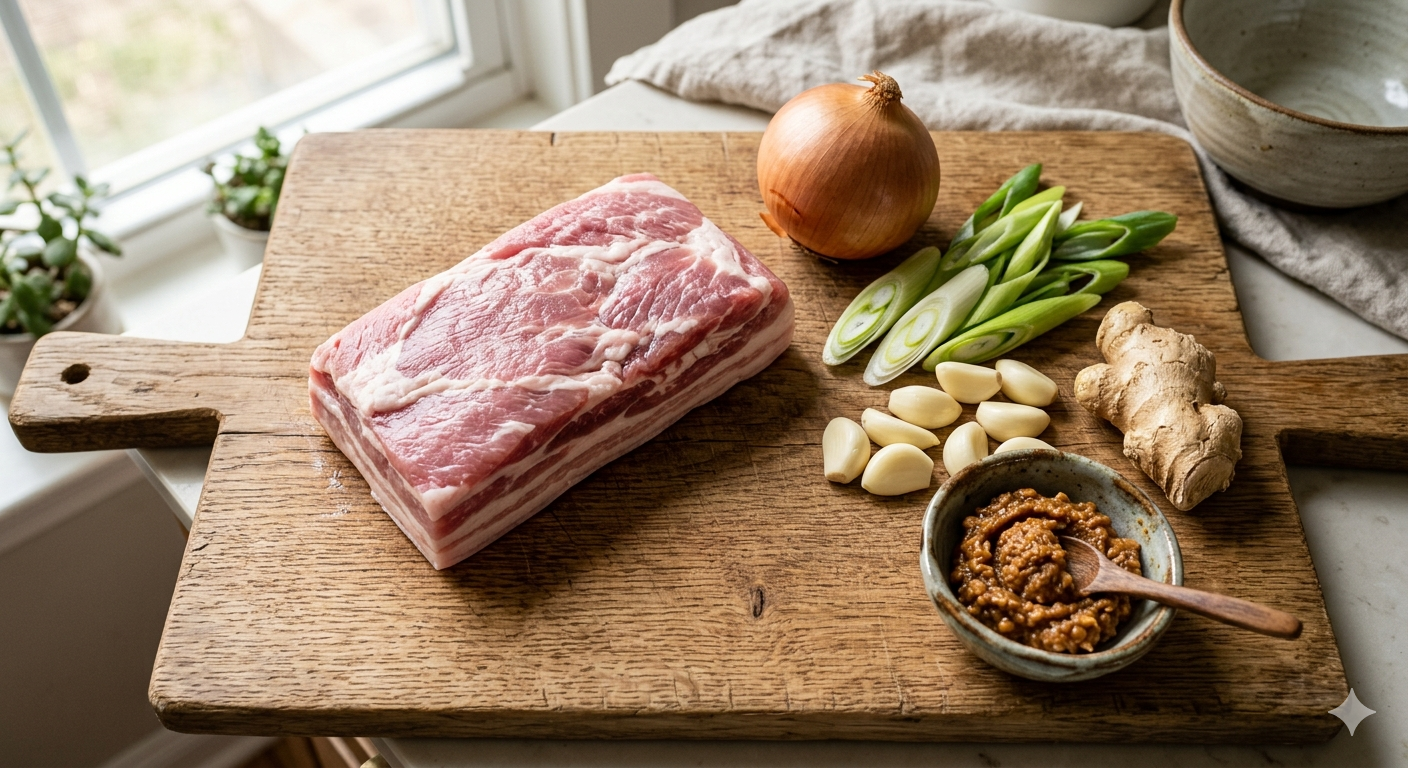
Choosing the cut is half the battle when making suyuk. Pork belly is moist and savory but can be fatty, while pork shoulder neck is leaner with a satisfying bite. Pork front leg is budget-friendly and has a higher lean-meat ratio, but it can feel dry if boiled too long or sliced too thick.
| Cut | Flavor and Texture | Advantages | Notes |
|---|---|---|---|
| Pork Belly | Layers of fat and lean meat make it moist and rich | Great for guests, bossam, and soft suyuk | May feel too oily for some people |
| Pork Shoulder Neck | Leaner than pork belly with a pleasant chew | Not overly fatty and has a good texture balance | The lean parts can become firm if boiled too long |
| Pork Front Leg | Lean, mild, and high in meat content | Cost-effective and suitable for kimjang suyuk or large batches | Slice thinly to reduce dryness |
| Shank | Chewy with a clear meat grain | Good for people who prefer less fat and more chew | Can be tough if not cooked thoroughly |
Golden Broth Ratio for 1 kg Pork
Basic Ingredients
- 1 kg pork
- 2.2 to 2.5 L water, enough to cover the meat
- 1 onion, cut in half with the skin on
- 1 large green onion, washed thoroughly including the root end
- 10 whole garlic cloves
- 1 knob ginger, thinly sliced
- 1 tablespoon whole peppercorns
Seasonings That Reduce Odor
- 2 tablespoons doenjang
- 1/2 cup cooking wine or soju
- 2 to 3 bay leaves, optional
- 1 packet instant black coffee or 1 mini coffee packet, optional
- 1/2 apple, optional
Wash onion skins thoroughly before using them.
Adding the onion with the skin on can deepen the color and aroma of the broth, but if soil or debris remains, it is not hygienic. Before using, remove any heavily soiled outer layers and rinse well under running water.
Coffee is optional.
Coffee can darken the color and help reduce odor, but too much may leave bitterness. For 1 kg of pork, about 1 packet of black coffee is enough.
Step-by-Step Method to Reduce Failure
Step 1. Remove Blood and Surface Moisture from the Meat
For refrigerated pork, lightly pat away surface moisture and blood with kitchen towels. Soaking fresh meat in water for a long time can dilute its flavor, so cleaning only the surface is usually enough. For frozen pork, thaw it in the refrigerator first for a more stable texture.
Step 2. Bring the Broth to a Full Boil First
Add water, green onion, onion, garlic, ginger, doenjang, cooking wine, and whole peppercorns to a pot and bring it to a boil first. When the water is fully boiling and the aroma of the aromatics rises, add the meat. This helps the outside of the meat cook quickly and reduces texture breakdown.
Step 3. Add the Meat and Boil on High Heat for 10 Minutes
After adding the meat, boil it over high heat with the lid open for the first 10 minutes. Skim off the foam once or twice for a cleaner-tasting broth. Keeping the lid open helps pork odor escape with the steam, which is good for reducing unwanted smells.
Step 4. Cook over Medium Heat for 35 to 45 Minutes
After the first 10 minutes on high heat, close the lid and reduce to medium heat so the inside cooks through. A typical 1 kg piece of pork is usually done in around 40 minutes, but if the meat is very thick or was very cold from the refrigerator, add another 5 to 10 minutes.
Step 5. Turn Off the Heat and Rest in the Broth for 10 Minutes
Do not take the meat out immediately when it seems cooked. Turn off the heat, keep the lid closed, and let it sit for about 10 minutes. During this time, the heat spreads evenly through the meat and the juices settle, so it feels less dry when sliced.
Step 6. Cool for 5 to 10 Minutes, Then Slice Against the Grain
If you slice suyuk as soon as it comes out of the pot, the meat fibers can break apart easily. Let it cool briefly at room temperature for 5 to 10 minutes, check the direction of the grain, and slice across the grain so it does not feel tough in the mouth.
Heat Control and Timing Formula
| Stage | Heat Level | Time | Main Purpose |
|---|---|---|---|
| Boil the broth | High heat | Until the broth reaches a rolling boil | Draw out the flavor and aroma of the aromatics first |
| Initial boiling after adding the meat | High heat | 10 minutes | Remove foam, release odor, and quickly set the surface |
| Cook the center | Medium heat | 35 to 45 minutes | Cook evenly all the way through |
| Rest | Heat off | 10 minutes | Settle the juices and keep the texture moist |
| Cool | Room temperature | 5 to 10 minutes | Maintain the shape and slice cleanly |
Always check that the meat is safely cooked.
Suyuk is usually cooked long enough, but if the meat is thick or the pot is small and heat does not circulate evenly, the center may be undercooked. If you have a thermometer, check the thickest center part. If not, pierce it with a chopstick and make sure no red blood comes out.
Cooking Tips Differ by Cut
Pork Belly Suyuk
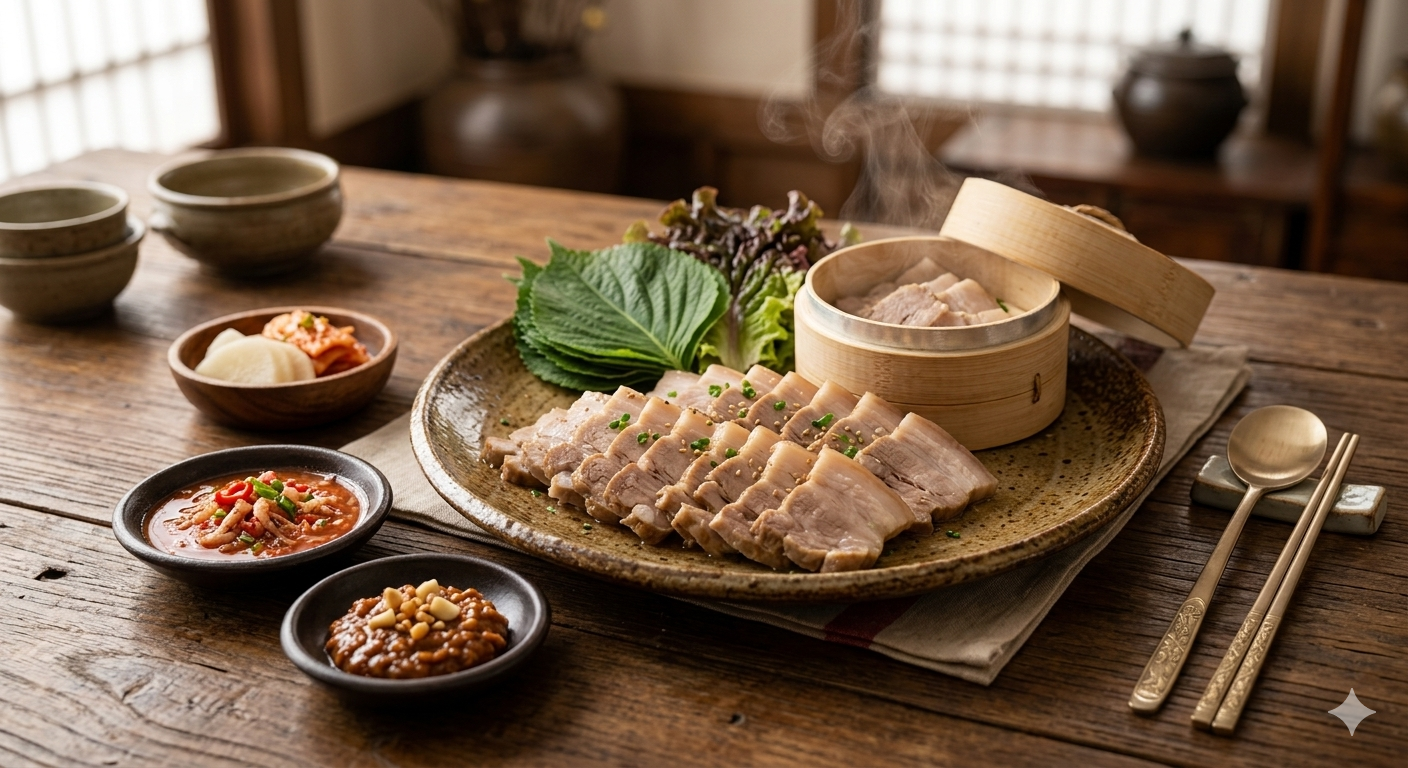
Pork belly has plenty of fat layers, making it easy to keep moist. However, if boiled too long, too much fat can render out and the texture may become limp. For 1 kg, cooking over medium heat for around 40 minutes and then resting it is a reliable method.
Pork Shoulder Neck Suyuk
Pork shoulder neck is lean yet pleasantly chewy. Because it has a high lean-meat ratio, it can become firm if overcooked, so resting and slicing against the grain are important. For guests, you can also boil pork belly and shoulder neck together.
Pork Front Leg Suyuk
Pork front leg is economical, but it can feel dry if sliced thickly. After boiling, let it rest well, then slice it thinly, about 0.4 to 0.6 cm. Enjoy it with salted shrimp sauce or ssamjang for a clean, lean flavor.
Shank Suyuk
Shank has a distinct grain and a chewy texture. It suits people who prefer chewiness over softness. It needs to be cooked thoroughly to reduce toughness, so if the piece is thick, increase the medium-heat cooking time slightly.
Why Pork Odor Remains and How to Fix It
| Problem | Possible Cause | Solution |
|---|---|---|
| Porky smell remains | Lid closed from the beginning, not enough ginger or garlic, old meat | Keep the lid open for the first 10 minutes on high heat; use ginger, whole peppercorns, and cooking wine |
| Meat is dry | Lean cut overcooked, removed immediately without resting | Rest in the broth for 10 minutes after turning off the heat; slice thinly |
| Shape falls apart | Sliced immediately after removing from the pot or sliced with the grain | Cool for 5 to 10 minutes, then slice against the grain |
| Flavor is bland | Broth is under-seasoned or the pork itself lacks flavor | Keep the base at 2 tablespoons doenjang and serve with salted shrimp sauce, ssamjang, or radish kimchi |
| Bitter taste remains | Too much coffee or too many bay leaves | Use no more than 1 packet of coffee and only 2 to 3 bay leaves |
Side Dishes That Pair Well with Suyuk
Salted Shrimp Sauce
Salted shrimp sauce pairs best with rich pork belly suyuk. Its salty flavor cuts through the greasiness of the fat, and adding thinly sliced garlic or Cheongyang chili makes it taste even cleaner.
Ssamjang
Ssamjang goes well with lean cuts such as pork shoulder neck or front leg. Mixing doenjang, gochujang, minced garlic, sesame oil, and sesame seeds can make the meat taste fuller and richer.
Radish Kimchi
Suyuk pairs well with side dishes that have sweetness and gentle heat, such as bossam kimchi or seasoned dried radish strips. They also help offset the dryness of lean cuts.
Napa Cabbage Wraps
Place suyuk, garlic, chili, and salted shrimp sauce on salted napa cabbage or fresh baby napa cabbage for the most classic bossam-style bite.
Storage and Reheating
Suyuk tastes best when eaten right after cooking whenever possible.
Cool leftover suyuk briefly, then store it in an airtight container in the refrigerator. Do not leave it at room temperature for a long time, and refrigerate any leftovers soon after the meal for safety.
For reheating, steaming is better than using a microwave.
If microwaved for too long, the lean meat can become firm. Steam it briefly in a steamer, or warm it gently in leftover broth to help maintain moisture.
Frequently Asked Questions
Q. Should I put suyuk in cold water or boiling water?
A. If you want a moist and springy texture, it is better to add the pork after the water with the broth ingredients has come to a full boil. Starting in cold water can make the broth taste richer, but it may draw flavor and texture out of the meat.
Q. Do I have to add doenjang?
A. It is not absolutely required, but doenjang helps reduce pork odor and adds a savory, earthy flavor. For 1 kg of pork, about 2 tablespoons is a safe amount.
Q. Will coffee make the taste strange?
A. Too much coffee can make it bitter. For 1 kg of pork, about 1 packet of black coffee can be used as a supporting ingredient to darken the color and reduce odor. If you dislike the aroma of coffee, you can leave it out.
Q. Why is pork front leg suyuk dry?
A. Pork front leg has a high lean-meat ratio, so it has less moisture from fat than pork belly. Resting it in the broth after boiling and slicing it thinly against the grain can reduce dryness.
Q. What should I do if the center is red after slicing the suyuk?
A. If the center appears undercooked, put it back into the broth and cook it longer. Especially with thick blocks of meat, do not judge only by the outside; check that the center is fully cooked.
Q. How should I reheat leftover suyuk?
A. The best method is to warm it briefly in a steamer or in leftover broth. If using a microwave, add a little water or broth and heat it in short intervals.
Final Thoughts
For pork suyuk, following the basics is more important than using complicated seasonings. Choose fresh meat, add it to boiling broth, keep the lid open for the first 10 minutes to release unwanted odor, cook it through over medium heat, and finally rest it in the broth. These steps greatly reduce the chance of failure.
Choose pork belly if you want soft, rich suyuk; pork shoulder neck if you prefer a leaner taste; pork front leg if you want value and leanness; and shank if you enjoy a chewy texture. After boiling, do not slice it immediately. Let it cool briefly, then slice against the grain to preserve both shape and texture.
Cooking Note
This recipe is written for cooking 1 kg of pork in a home kitchen pot. Boiling time may vary depending on meat thickness, pot size, heat level, and whether the meat is refrigerated or frozen. For thick pieces of pork, always confirm that the center is fully cooked before eating.
Shopping note
For bossam-style suyuk, compare salted shrimp, ssamjang, and a practical steamer. Check ingredients, capacity, reviews, and whether each item fits your kitchen before buying.
As part of affiliate activities, I may receive a small commission when qualifying purchases are made through links in this post.