




For a make-ahead side dish, flavor matters—but you only keep reaching for it if the texture stays lively even after a trip in and out of the refrigerator. Stir-fried garlic scapes with dried shrimp uses simple ingredients, but the crunch and glossy finish change completely depending on how briefly you blanch the garlic scapes, whether you dry-toast the dried shrimp first, and when you add the oligosaccharide syrup.
Stir-Fried Garlic Scapes with Dried Shrimp: A Glossy Korean Side Dish Recipe
Garlic scapes are loved for their pleasantly pungent aroma and crisp texture. Add nutty dried shrimp and stir-fry everything quickly in a soy-based seasoning, and you get a sweet-salty Korean side dish that pairs beautifully with rice, lunch boxes, or grilled meat.
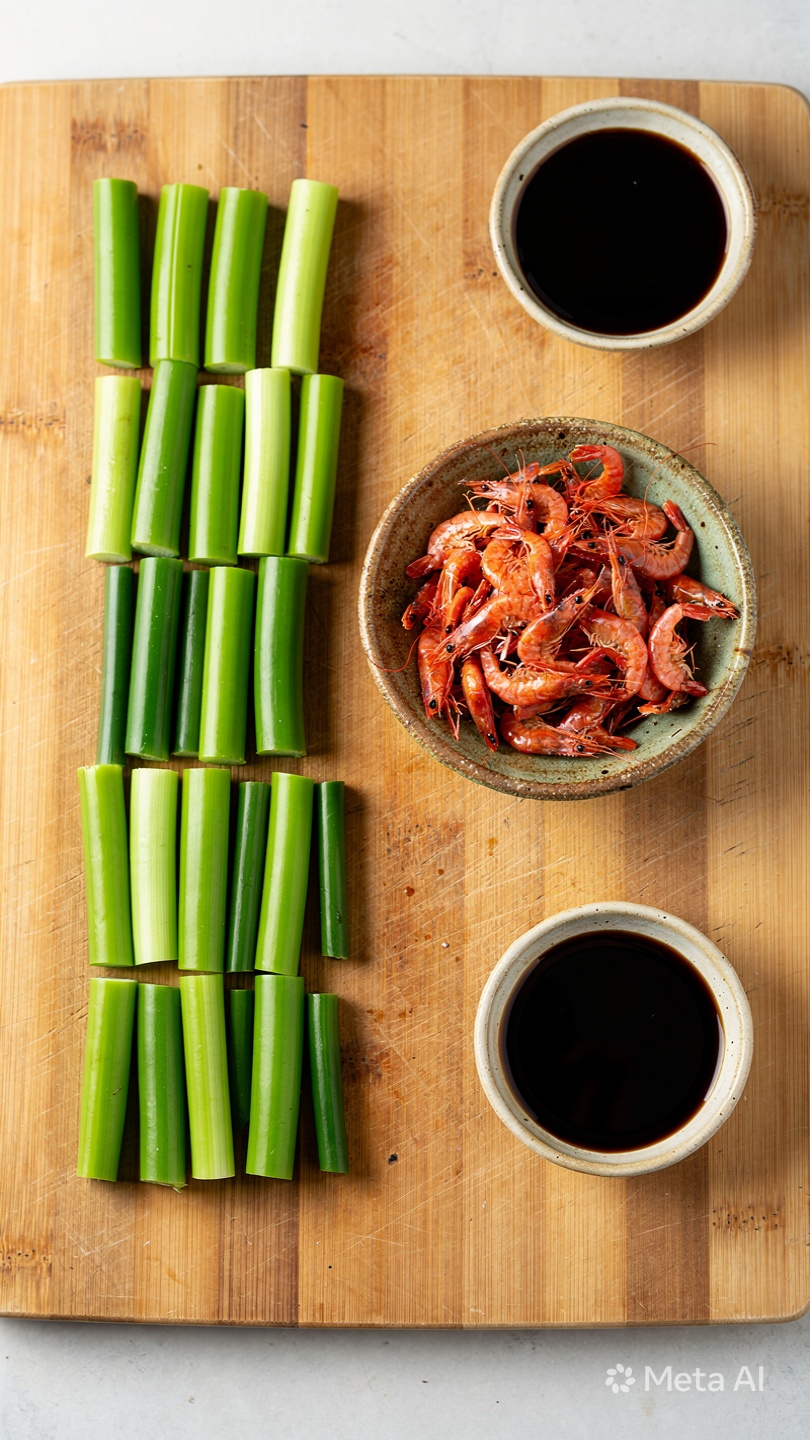
Garlic scapes are the flower stems of garlic, often used in stir-fries, seasoned salads, pickles, and braises. They have a sharp aroma, but it is milder than garlic cloves; when briefly blanched or stir-fried, their harsh bite softens while the crunch stays intact.
Dried shrimp taste cleaner when toasted first in a dry pan instead of being added straight to the seasoning. This step drives off any stale odor and moisture while bringing out their nutty flavor. After toasting, shake them once in a sieve to remove crumbs for a neater finished side dish.
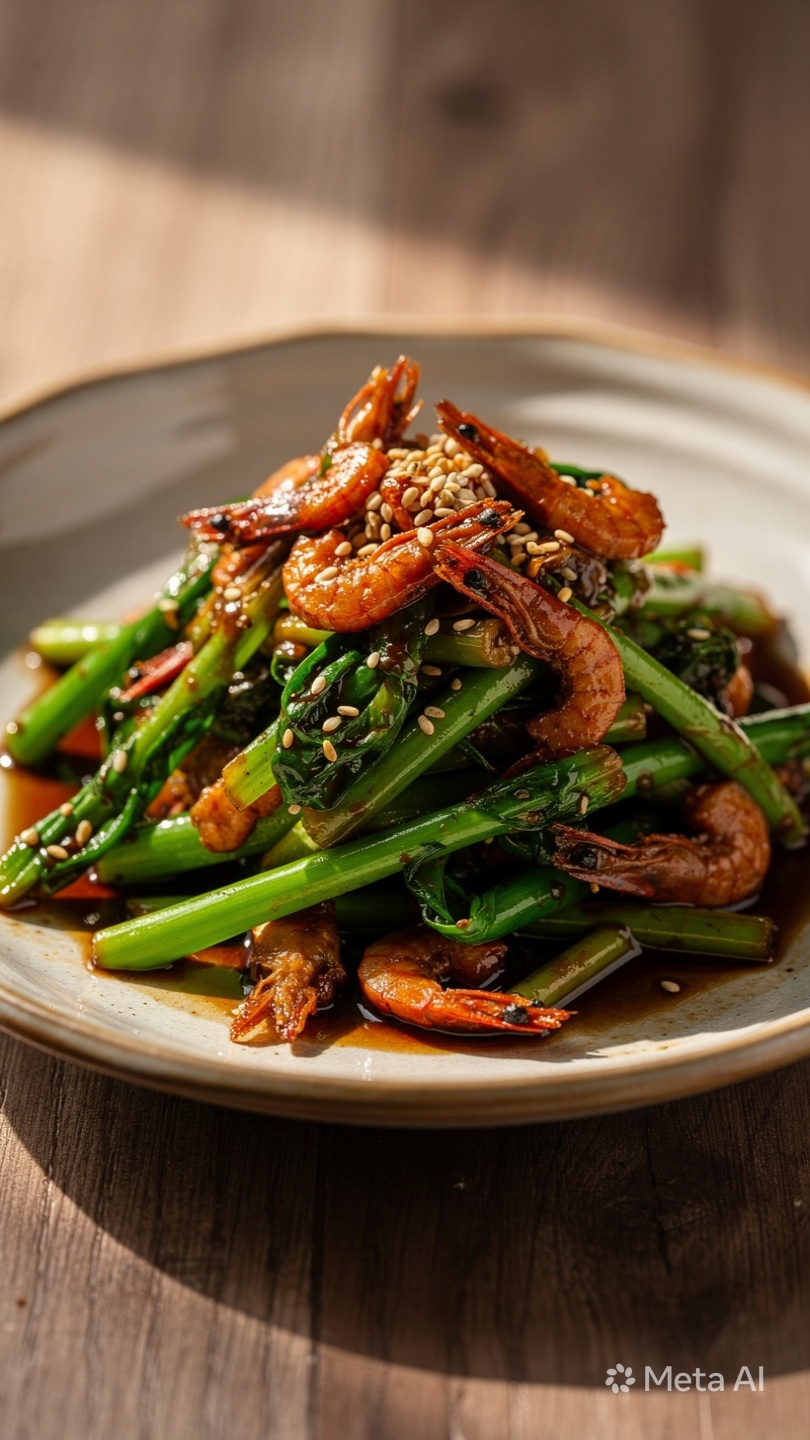
Basic Information for Stir-Fried Garlic Scapes with Dried Shrimp
Essential Ingredients and the Golden Seasoning Ratio
Basic Ingredients
- 1 bunch garlic scapes, about 250 to 300 g
- 1 cup dried shrimp or headless dried shrimp, about 50 g
- 2 tablespoons cooking oil
- 1/2 tablespoon coarse salt, for blanching
Sweet-Salty Soy Seasoning
- 3 tablespoons dark soy sauce
- 3 tablespoons water
- 2 tablespoons cooking wine
- 1 tablespoon sugar
- 2 tablespoons oligosaccharide syrup or corn syrup
- 1 tablespoon sesame oil
- 1 tablespoon whole sesame seeds
It is best not to add the oligosaccharide syrup to the seasoning in advance.
If it simmers for a long time from the beginning, the side dish can feel sticky or firm once cooled. Add it after the liquid has nearly reduced and the heat is off, coating with residual heat for a more natural shine.
Adjust the soy sauce to match the amount of garlic scapes.
Dried shrimp often have their own saltiness. If your shrimp are quite salty, reduce the soy sauce to about 2 1/2 tablespoons and adjust to taste at the end.
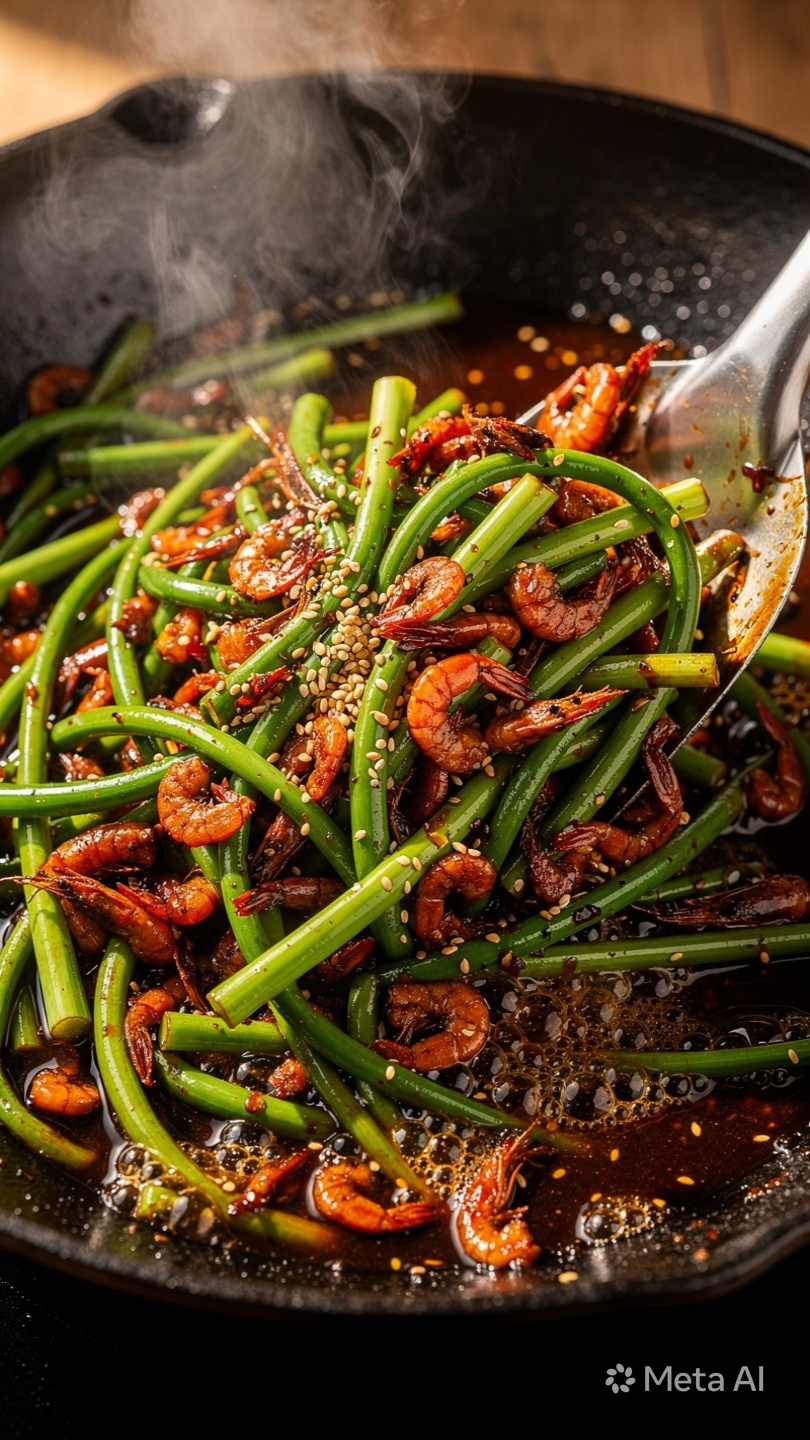
How to Prep Garlic Scapes
Rinse the garlic scapes under running water, then trim off the ends and any tough flower stalk portions. Very fibrous sections can remain tough even after stir-frying, so it is best to remove them during prep.
Even lengths help the pieces cook at the same rate during blanching and stir-frying. For lunch boxes or children’s side dishes, you can cut them a little shorter, about 3 to 4 cm, for easier eating.
Add coarse salt to boiling water and blanch the garlic scapes for just 30 to 40 seconds. Rinse immediately in cold water to stop the residual heat, then drain thoroughly in a sieve so the seasoning does not slide off during stir-frying.
Cooking Order for Crunch and Gloss
Briefly blanch the garlic scapes
Bring plenty of water to a boil in a pot and add 1/2 tablespoon coarse salt. Add the trimmed garlic scapes, blanch for only 30 to 40 seconds, then rinse immediately in cold water. Drain well so the oil does not splatter and the seasoning coats properly when stir-fried.
Toast the dried shrimp in a dry pan
Place the dried shrimp in an un-oiled frying pan and lightly stir-fry over medium-low heat for 1 to 2 minutes. When the shrimp smell nutty, turn off the heat and shake them in a sieve to remove crumbs and whiskers.
Coat the garlic scapes with oil first
Add 2 tablespoons cooking oil to the pan, then add the blanched garlic scapes and stir-fry over medium heat for about 1 minute. This creates a light oil film on the surface, preserving color and texture while helping prevent the seasoning from clumping in one spot.
Add the soy seasoning and reduce
Mix the dark soy sauce, water, cooking wine, and sugar, then pour it into the pan and stir-fry so the seasoning soaks into the garlic scapes. Simmer over medium heat until only a small amount of seasoning remains. Do not add the oligosaccharide syrup or sesame oil yet.
Add the dried shrimp at the end
When the liquid has almost reduced, add the pre-toasted dried shrimp and mix quickly. If the dried shrimp are added from the beginning, they can absorb too much seasoning and become salty and soggy, so it is better to combine them at the end.
Turn off the heat and add oligosaccharide syrup, sesame oil, and sesame seeds
After turning off the heat, add 2 tablespoons oligosaccharide syrup, 1 tablespoon sesame oil, and 1 tablespoon whole sesame seeds, then toss with the residual heat. At this stage the gloss comes alive, and the seasoning coating stays smooth even after cooling.
Cooking Time at a Glance
| Step | Time | Heat Level | Main Purpose |
|---|---|---|---|
| Blanch garlic scapes | 30 to 40 seconds | Boiling water | Reduce harsh bite, keep color, preserve crunch |
| Toast dried shrimp | 1 to 2 minutes | Medium-low heat | Remove stale odor, enhance nuttiness |
| Stir-fry garlic scapes | 1 minute | Medium heat | Oil coating, prepare for seasoning adhesion |
| Reduce seasoning | 2 to 3 minutes | Medium heat | Coat the garlic scapes with soy seasoning |
| Final coating | 30 seconds | Residual heat after turning off the heat | Add oligosaccharide gloss and preserve sesame oil aroma |
Key Secrets That Change the Flavor
Blanch briefly to keep the green color bright
If you blanch garlic scapes too long, they lose crunch and the color turns dull. Keep the blanching time short, about 30 to 40 seconds, and rinse right away in cold water to stop the residual heat.
Dried shrimp should be added at the end
Dried shrimp absorb seasoning quickly. If added from the beginning and stir-fried for too long, they can become salty and soggy, so add them at the end after the garlic scapes have absorbed some seasoning.
Add oligosaccharide syrup after turning off the heat
If oligosaccharide syrup or corn syrup is simmered too long over high heat, it can feel sticky and hard once cooled. Turn off the heat and coat with residual heat for a natural gloss.
Drain thoroughly so the seasoning coats well
If water remains on the blanched garlic scapes, the seasoning can become diluted and slide off during stir-frying. After draining in a sieve, gently press with a paper towel to reduce moisture for a cleaner finish.
Causes of Failure and How to Fix Them
| Problem | Possible Cause | Solution |
|---|---|---|
| Garlic scapes are tough | Thick, fibrous sections were used as-is | Remove the ends and tough flower stalks; add 10 seconds to blanching if needed |
| Color turns yellowish | Blanched or stir-fried too long | Blanch for 30 to 40 seconds, rinse in cold water, and reduce seasoning briefly |
| Dried shrimp taste salty | Simmered in seasoning for too long from the start | Toast first in a dry pan and add at the end |
| Seasoning does not cling | Too much water remained on the blanched garlic scapes | Drain thoroughly in a sieve before stir-frying |
| Hard after cooling | Oligosaccharide syrup was heated for too long | Turn off the heat, then coat with oligosaccharide syrup using residual heat |
Spicy and Kid-Friendly Variations
For a kid-friendly side dish
Add cooking wine to reduce the shrimp smell, and reduce the soy sauce to about 2 1/2 tablespoons. Skip Cheongyang chili peppers and red pepper powder, and add a little extra oligosaccharide syrup to soften the sweet-salty flavor.
For adult tastes
Thinly slice Cheongyang chili peppers and add them at the end, or add 1/2 tablespoon red pepper powder for a spicy rice side dish. If using red pepper powder, add it during the seasoning-reducing step so it does not taste raw and powdery.
How to make it less sweet
Reduce the oligosaccharide syrup to 1 tablespoon and add 1 tablespoon more water to lower the sweetness. If the dried shrimp are very salty, you can also reduce the sugar to 1/2 tablespoon.
How to make it nuttier
Add a generous amount of whole sesame seeds at the end, or use a small amount of perilla oil instead of sesame oil for a stronger nutty aroma. Perilla oil has a bold fragrance, so start with 1 teaspoon and adjust from there.
Storage Method and Lunch Box Tips
Cool completely before placing in an airtight container.
If you close the lid while it is still warm, condensation can form and the side dish may soften quickly. Spread it on a wide plate to let the steam escape, then transfer to an airtight container and refrigerate.
For lunch boxes, it is important to pack it without excess moisture.
If liquid remains, it can mix with other side dishes in the lunch box and reduce the texture. Reduce the seasoning well at the end so it is not watery, then pack only after completely cooled for a cleaner result.
Even refrigerated, this is not a side dish to keep for too long.
Cooked food can lose quality and safety over time even when refrigerated. At home, it is better to make only enough to eat within 2 to 3 days rather than preparing a very large batch.
Meal Pairings That Go Well Together
| Meal | Why It Works | Good Side Dishes to Add |
|---|---|---|
| White rice + doenjang jjigae | The savory soy stir-fry pairs well with the earthy stew broth | Rolled omelet, kimchi, seasoned cucumber salad |
| Lunch box | Low moisture and good color make it useful as a lunch box side dish | Stir-fried anchovies, stir-fried sausage, fried egg |
| Grilled meat table | The pungent aroma of garlic scapes cuts through the richness of meat | Lettuce wraps, ssamjang, seasoned green onion salad |
| Bibimbap | Chop it finely to add texture and savory depth | Crushed roasted seaweed, sesame oil, fried egg |
Frequently Asked Questions
Q. Do I have to blanch the garlic scapes?
A. It is not absolutely required, but brief blanching reduces the sharp bite and stabilizes the color and texture. You can stir-fry them raw, but thick garlic scapes take longer to cook and may turn dull in color.
Q. Should I rinse dried shrimp?
A. It depends on the product. If there is a lot of dust or crumbs, shake them in a sieve or rinse very quickly, then remove all moisture completely. Dried shrimp with remaining moisture can smell fishy when cooked, so it is best to toast them well in a dry pan.
Q. Can I use corn syrup instead of oligosaccharide syrup?
A. Yes. Corn syrup gives a nice gloss, but it can be sweeter and stickier, so you may want to start with about 1 1/2 tablespoons and adjust to taste.
Q. Can I add gochujang?
A. Yes. Add 1 tablespoon gochujang to turn it into a spicy-sweet seasoning. In that case, reduce the dark soy sauce to about 2 tablespoons and add a little more water so it does not burn while stir-frying.
Q. Why does it become hard after refrigeration?
A. If oligosaccharide syrup or corn syrup is heated for too long, the seasoning can harden after cooling. Turn off the heat at the end and toss with residual heat to reduce hardness.
Q. What should I do if the garlic scapes are too pungent?
A. Increase the blanching time by about 10 to 20 seconds, or add a little more water to the seasoning and reduce briefly. However, cooking too long can reduce the crunch.
Final Notes
Stir-fried garlic scapes with dried shrimp may look like a simple soy-sauce stir-fry, but the order matters if you want it to taste good. Briefly blanch the garlic scapes to preserve color and crunch, and toast the dried shrimp in a dry pan first to bring out their nuttiness.
Finally, add the oligosaccharide syrup and sesame oil only after turning off the heat, so the gloss comes alive and the texture stays soft even after cooling. Follow just these three points, and you can make a delicious rice-stealing Korean side dish that still tastes good after being stored in the refrigerator.
Cooking Note
This recipe is based on 250 to 300 g garlic scapes and 50 g dried shrimp. Saltiness can vary depending on the thickness of the garlic scapes, the salt level of the dried shrimp, and the type of soy sauce used, so taste at the end and adjust the soy sauce and oligosaccharide syrup as needed.