




A strike is a workers’ right, but in workplaces such as semiconductor fabs, where even a brief stoppage can lead to safety risks, facility damage, or product deterioration, the boundary of lawful industrial action quickly becomes a legal issue. The court’s provisional injunction decision issued ahead of the Samsung Electronics union’s planned general strike is a case that reaffirms exactly where that line is drawn.
Samsung Electronics Strike Injunction Partly Granted: What the Court Decision Means for the Planned Union Walkout
On May 18, 2026, the 31st Civil Division of the Suwon District Court partially granted Samsung Electronics’ application for a provisional injunction seeking to prohibit unlawful industrial action against the Samsung Electronics branch of the Samsung Group Super-Enterprise Union, the National Samsung Electronics Union, and others. The general strike itself was not banned outright, but the court held that essential safety and security-related work, including safety protection facilities and wafer deterioration prevention, must be maintained at normal operating levels.
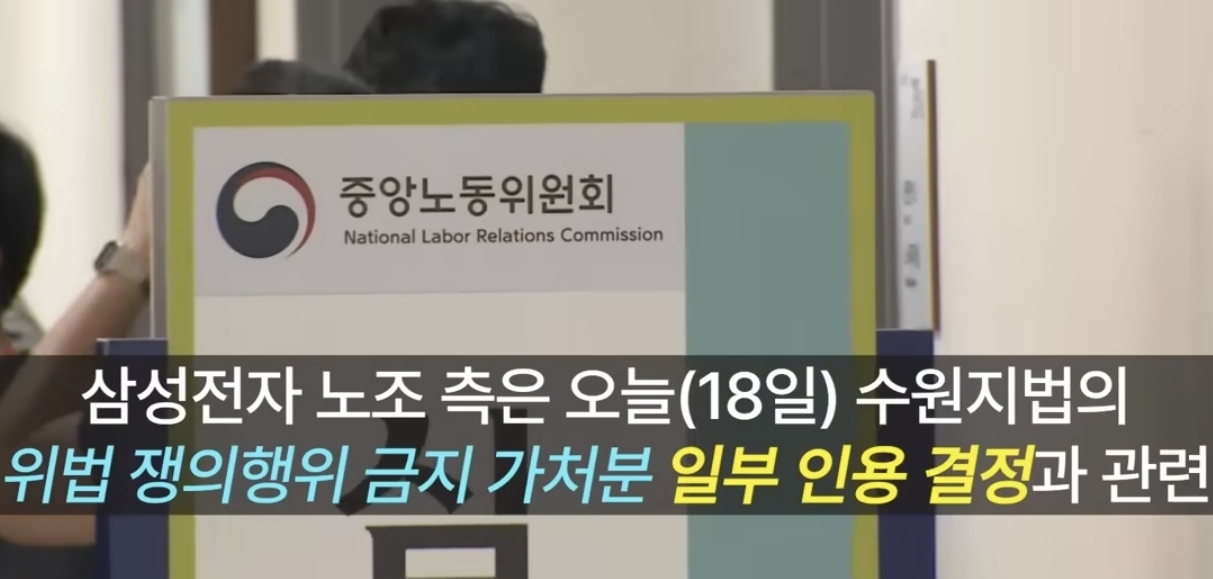
The decision came three days before the Samsung Electronics unions’ general strike scheduled for May 21. The court recognized the importance of safety protection facilities at semiconductor fabs, including fire prevention, exhaust, and drainage systems, as well as work to prevent damage to production facilities and deterioration of wafers. As a result, the unions may not obstruct these duties from being maintained at normal levels in terms of staffing, operating hours, operating scale, and duty of care.
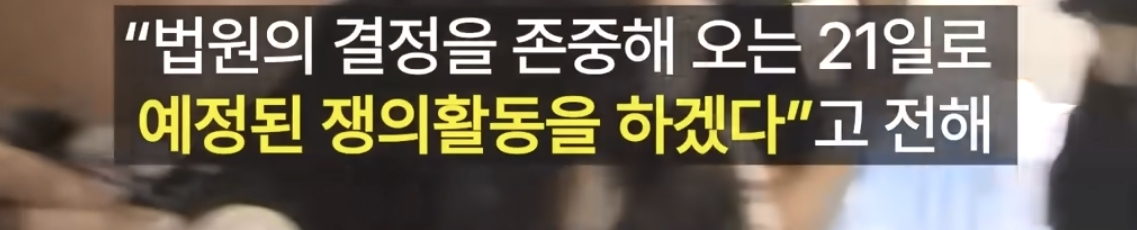
However, the decision should not be read as a ban on the strike itself. While the court accepted key parts of Samsung Electronics’ request concerning the maintenance of safety and security facilities and a ban on occupation, it rejected some of the company’s requests after finding insufficient necessity. The unions also said they would respect the court’s decision while proceeding with the planned industrial action on May 21.
Basic Case Information
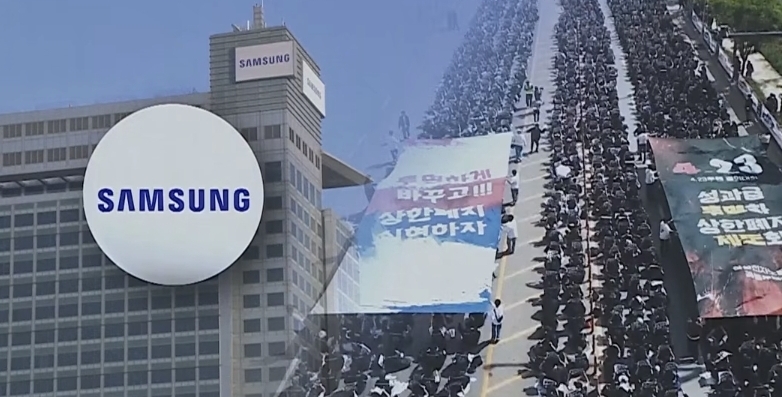
Key Points Accepted by the Court
Maintenance of Safety Protection Facilities
The court found that fire prevention, exhaust, drainage, and similar facilities must be maintained during industrial action with the same level of staffing, operating hours, and operating scale as usual. Given the nature of semiconductor manufacturing, a stoppage of safety facilities can directly affect both facility safety and human safety.
Work to Prevent Wafer Deterioration
Work to prevent wafer deterioration and damage to production facilities was also recognized as security-related work. The court’s reasoning was that even if some work has the character of production activity, it must be maintained during industrial action if a stoppage could cause facility damage or deterioration of raw materials or products.
Ban on Occupation and Lock Installation
The court prohibited occupying all or part of facilities, arbitrarily installing locking devices, and obstructing other employees’ normal access. In particular, the court issued a ban on occupation against the Samsung Electronics branch of the Super-Enterprise Union and key officials.
Indirect Compulsory Payments
The court also ordered indirect compulsory payments requiring each union to pay KRW 100 million per day and key union officials to pay KRW 10 million per day if they violate their obligations. This is a mechanism intended to ensure the effectiveness of the decision.
Structure of the Indirect Compulsory Payments
| Target | Amount in Case of Violation | Meaning |
|---|---|---|
| Each labor union | KRW 100 million per day of violation | A financial mechanism pressuring compliance with obligations such as maintaining safety protection facilities, refraining from obstructing security-related work, and avoiding occupation |
| Key union officials | KRW 10 million each per day of violation | Has the effect of increasing the possibility of individual responsibility for on-site direction and organizing activities |
More important than the amount itself is the restriction on the method of the strike.
The indirect compulsory payments should not be seen merely as a type of fine. Because the financial burden may increase on a daily basis if conduct prohibited by the court occurs, the unions must manage safety and security facilities, access, and occupation issues very carefully even if they proceed with the strike.
What the Injunction Decision Means
The decision did not block all industrial action. Instead, it limited acts with a high likelihood of illegality, such as interference with safety protection facilities and security-related work, occupation, and obstruction of access. Therefore, it is difficult to say that the unions’ right to take industrial action has disappeared.
The reason the court placed importance on fire prevention, exhaust and drainage facilities, and work to prevent wafer deterioration is the unique nature of semiconductor manufacturing. The decision reflects concern that the suspension of some work could go beyond simple production delays and lead to facility damage or product deterioration.
Production disruption is an important source of leverage in a strike, but the court did not permit methods that would halt safety protection facilities or security-related work. For this reason, the intensity and methods of the general strike may be adjusted from what was initially announced.
According to some reports, parts of the company’s requests, such as restrictions related to alleged threats against union members or appeals to participate in the strike, were dismissed because their necessity was not recognized. Therefore, it is difficult to conclude that 100% of the company’s demands were accepted.
Issue-by-Issue Summary
| Issue | Court’s View | Impact on the Strike |
|---|---|---|
| Safety protection facilities | Must be maintained at normal levels | Limits disruptions to safety-related staffing and operations, including fire prevention, exhaust, and drainage |
| Preventing wafer deterioration | Recognized as security-related work | Restricts methods that increase the risk of physical or quality-related damage on production lines |
| Facility occupation | Occupation of all or part of facilities prohibited | Limits industrial action that controls access to factories or facilities |
| Obstruction of access | Installing locks and obstructing access by other employees prohibited | Secures access for non-striking employees and essential personnel |
| Indirect compulsory payments | KRW 100 million per union per day; KRW 10 million per key official per day | Creates a financial burden if violations occur |
| General strike itself | Difficult to view as completely banned | The unions say they will proceed with the planned industrial action while complying with the court’s decision |
The Unions’ Position and Remaining Variables
The unions’ position is that they will respect the court’s decision but proceed with the strike as scheduled.
The union side explained that while it acknowledges the need for safety protection facilities and security-related work, there had been disputes over the actual number of personnel restricted from strike participation and the specific scope of those restrictions. Accordingly, the May 21 general strike is likely to proceed within the scope of the court’s decision.
Possibility of a Negotiated Settlement
The injunction decision may affect the method of the strike, but it does not directly resolve the issues in labor-management negotiations. If key bargaining topics such as performance bonuses, wages, and working conditions remain unresolved, the outcome of negotiations will be the most important variable.
Scale of Strike Participation
The perceived effect of the strike will depend on how many workers actually participate once essential safety and security personnel are excluded. The announced scale and the actual scale of on-site participation should be viewed separately.
Disruption to Semiconductor Production
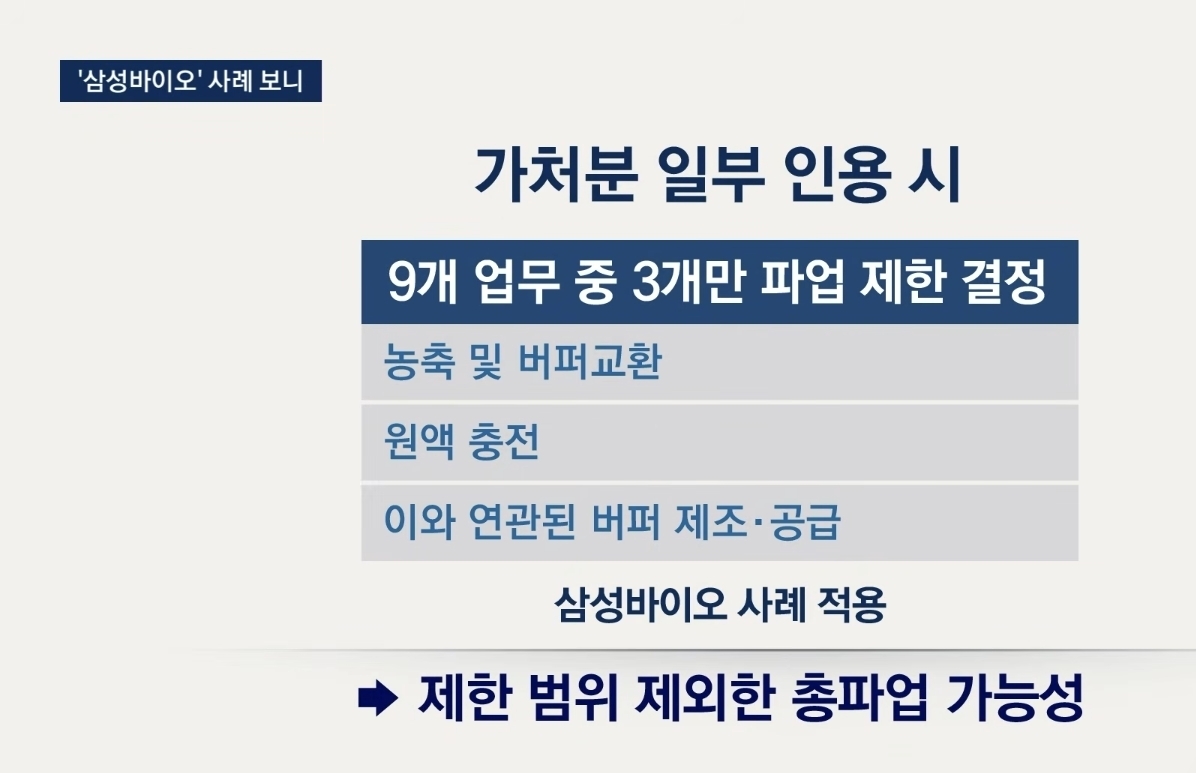
The court’s decision protects work to prevent facility damage and wafer deterioration, but the possibility of disruption to ordinary production processes has not disappeared entirely. Staffing by process and the use of replacement personnel will be key.
Role of the Government and the National Labor Relations Commission
The Samsung Electronics labor dispute has grown into an issue of interest for the semiconductor industry and the broader economy. Mediation by the National Labor Relations Commission, government messaging, and the direction of renewed labor-management talks should also be watched.
Points Investors and General Readers Should Watch
- The decision is closer to a restriction on interference with essential safety and security work than to a ban on the strike itself.
- Because the unions have said they will proceed with the strike as scheduled, the actual participation level on May 21 is important.
- In semiconductor processes, even disruption to some steps can have broad ripple effects, so whether production is disrupted is a key short-term variable.
- Because the indirect compulsory payments are large, the likelihood of on-site occupation, obstruction of access, or suspension of essential duties by the unions may decrease.
- The intensity of the strike may change if disputes over performance bonuses and wage negotiations are resolved.
- Samsung Electronics’ share price and semiconductor supply-chain issues may reflect not only the court decision but also the negotiation outcome, strike participation rate, and any production disruptions.
Core Interpretation of This Decision
First, the court recognized the unique nature of semiconductor processes.
Unlike ordinary workplaces, semiconductor manufacturing lines involve equipment, wafers, chemicals, and fire prevention, exhaust, and drainage systems operating together. The court therefore found that even if some tasks appear to be production work, they may be protected as security-related work if their suspension creates a risk of facility damage or product deterioration.
Second, the court drew a line between the unions’ right to strike and the company’s right to protect its facilities.
The right of labor unions to strike is guaranteed, but the decision made clear that this does not extend to facility occupation, installation of locking devices, obstruction of other employees’ access, or interference with the maintenance of safety protection facilities.
Third, the practical pressure of the general strike may be reduced.
The strongest effect of a strike comes from halting core processes, but the court’s decision requires essential work that prevents damage to facilities and products to continue. Therefore, even if the unions proceed with the strike, its method and intensity are likely to be limited.
Frequently Asked Questions
Q. Did the court completely ban the Samsung Electronics unions’ general strike?
A. No. This decision partially grants a provisional injunction prohibiting unlawful industrial action. Rather than banning the general strike outright, it should be understood as restricting specific acts such as interference with safety protection facilities, security-related work, facility occupation, and obstruction of access.
Q. Does this mean the unions will not strike on May 21?
A. Based on their publicly stated position so far, the unions said they will respect the court’s decision but proceed with the industrial action scheduled for May 21. However, the method of the strike may be adjusted in line with the scope of the court’s decision.
Q. How large are the indirect compulsory payments?
A. Reports indicate that if a violation occurs, each union may face KRW 100 million per day, while key union officials may face KRW 10 million per day.
Q. Why is work to prevent wafer deterioration important?
A. Wafers are a core material in semiconductor production. If deterioration or damage occurs due to a process stoppage or poor management, the losses can go beyond simple production delays, which is why the work was recognized as security-related.
Q. Is this a positive decision for Samsung Electronics?
A. It can be interpreted as favorable to the company in that safety protection facilities and core security-related work must be maintained at normal levels. However, because the strike itself has not disappeared, negotiations and on-site conditions still need to be watched.
Q. What should investors watch?
A. Key check points include the actual strike participation rate on May 21, whether production lines are disrupted, the outcome of labor-management negotiations, the direction of government and National Labor Relations Commission mediation, and any impact on the semiconductor supply chain.
Conclusion
The decision partially granting Samsung Electronics’ provisional injunction against unlawful industrial action does not completely block the unions’ general strike, but it does impose clear limits on how the strike may be conducted. In particular, the finding that safety protection facilities and work to prevent wafer deterioration must be maintained at normal levels may help reduce the risk of a shutdown on semiconductor production lines.
Still, because the unions have said they will proceed with the planned strike, it is difficult to say the dispute is over. The key questions ahead are how the unions will conduct the strike after the court decision, how stably Samsung Electronics can maintain its production lines, and whether labor-management negotiations can reach a settlement before or after the strike.
Check Point
This issue may change quickly depending on the court decision, the unions’ position, and labor-management negotiations. The most accurate way to confirm whether the strike actually proceeds and the degree of production disruption is to check official announcements and follow-up reports after May 21.