




There are moments when a pair of sneakers becomes more than footwear and turns into a historical object. The Nike Moon Shoe is one of those models. It looks rough and handmade today, but it carries the experimental spirit that existed before Nike became a global sports brand.
Nike Moon Shoe Explained: The Waffle-Sole Runner Behind a $437,500 Auction Record
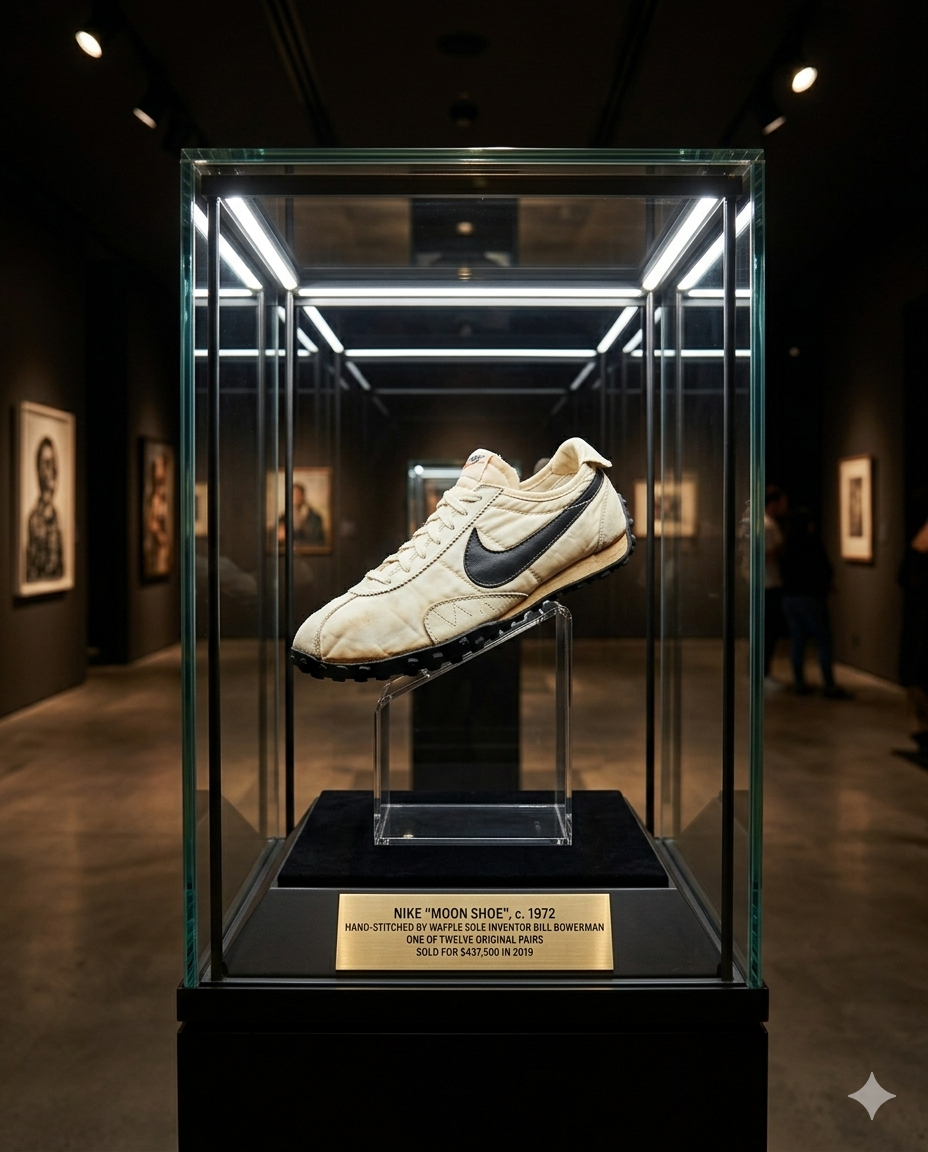
The Nike Moon Shoe is an early Nike running flat made in very small numbers for the 1972 Olympic Trials. It came out of Bill Bowerman’s waffle-sole experiments and became widely known again when a pair sold for $437,500 at a Sotheby’s auction in 2019.
The model matters not simply because it is old. Its waffle-inspired outsole, hand-built character, early Swoosh, and tiny production run all point to the moment when Nike was still forming both its technology and its brand identity. For readers who follow retro running shoes, current sneaker price checks can also help compare related models.
Basic information about the Nike Moon Shoe
- Official name: Nike Waffle Racing Flat “Moon Shoe”
- Period: 1972
- Background: An early Nike running flat associated with the 1972 Olympic Trials
- Key feature: Waffle-pattern rubber outsole
- Known production: Often described as about 12 pairs
- 2019 auction price: $437,500
In short, the Moon Shoe represents the start of Nike’s waffle-sole idea. Its value comes from a combination of history, scarcity, preservation, and the way the auction record turned a running shoe into a collectible cultural artifact.
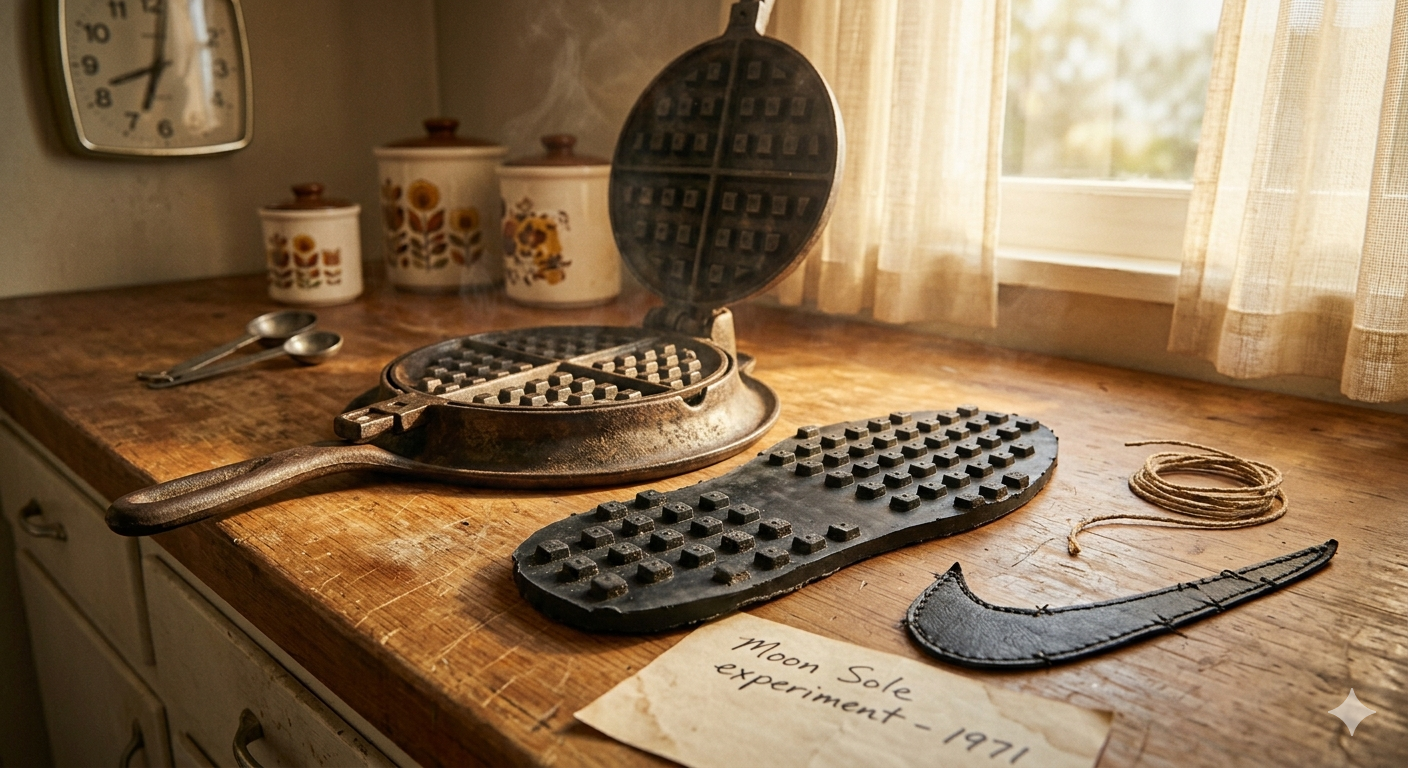
How a waffle iron became a running-shoe innovation
First, the starting point was Bill Bowerman’s experiment. Bowerman, a Nike co-founder and University of Oregon track coach, wanted lighter and more stable running shoes for athletes. He was looking for a different traction structure from traditional spikes.
Second, the grid pattern of a waffle iron became the outsole idea. According to the famous story, Bowerman noticed the pattern on his wife’s waffle iron and experimented by pouring rubber into it. That experiment led to an early form of the waffle-pattern sole.
Third, the purpose was better traction and cushioning. The waffle pattern helped runners grip dirt and track surfaces while keeping the shoe lighter and more efficient. The Moon Shoe is one of the most symbolic early examples of that idea becoming a real running flat.
Why was it called the “Moon Shoe”?
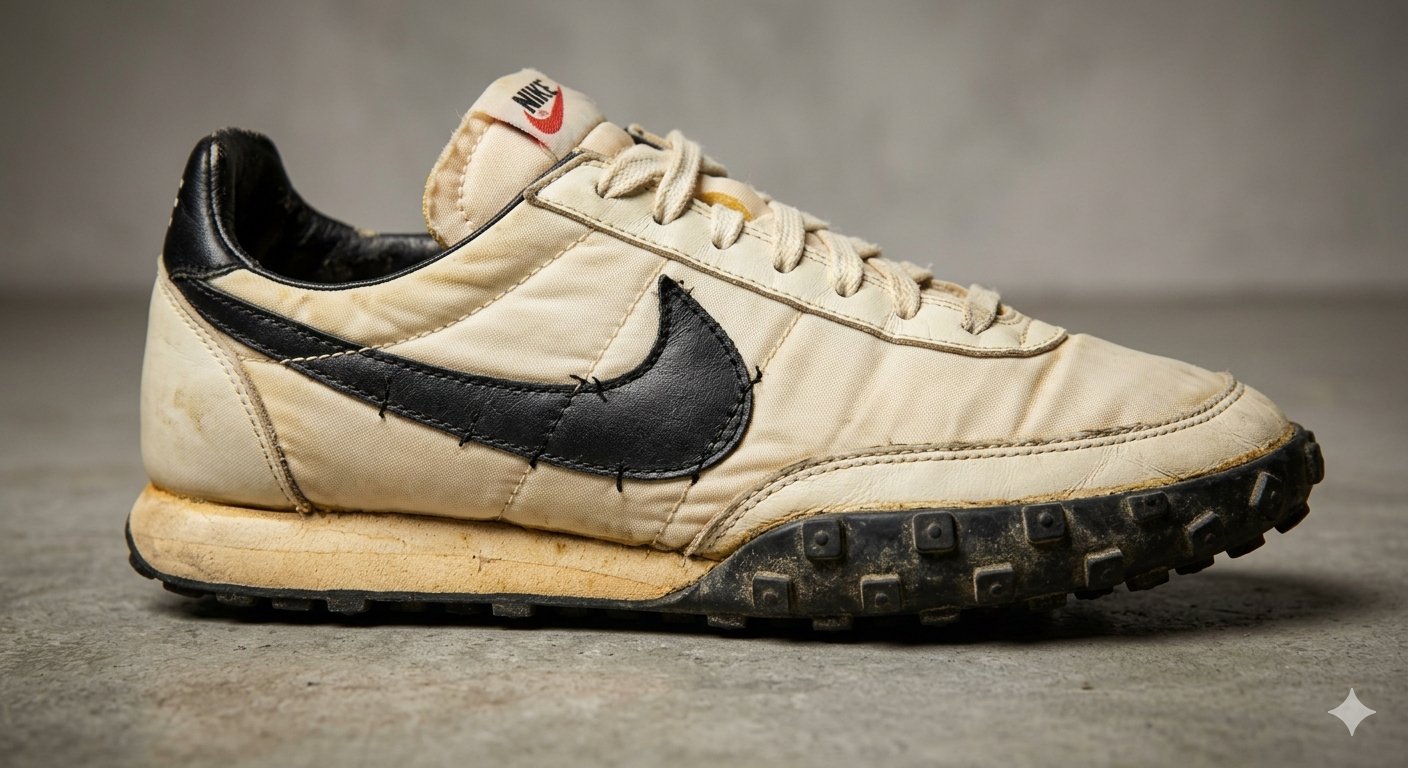
The nickname came from the marks left by the outsole. When the waffle pattern pressed into dirt, it created crater-like impressions that reminded people of footprints on the lunar surface after the 1969 moon landing. The name therefore describes the shoe’s most important technical feature in a simple visual way.
Design details at a glance
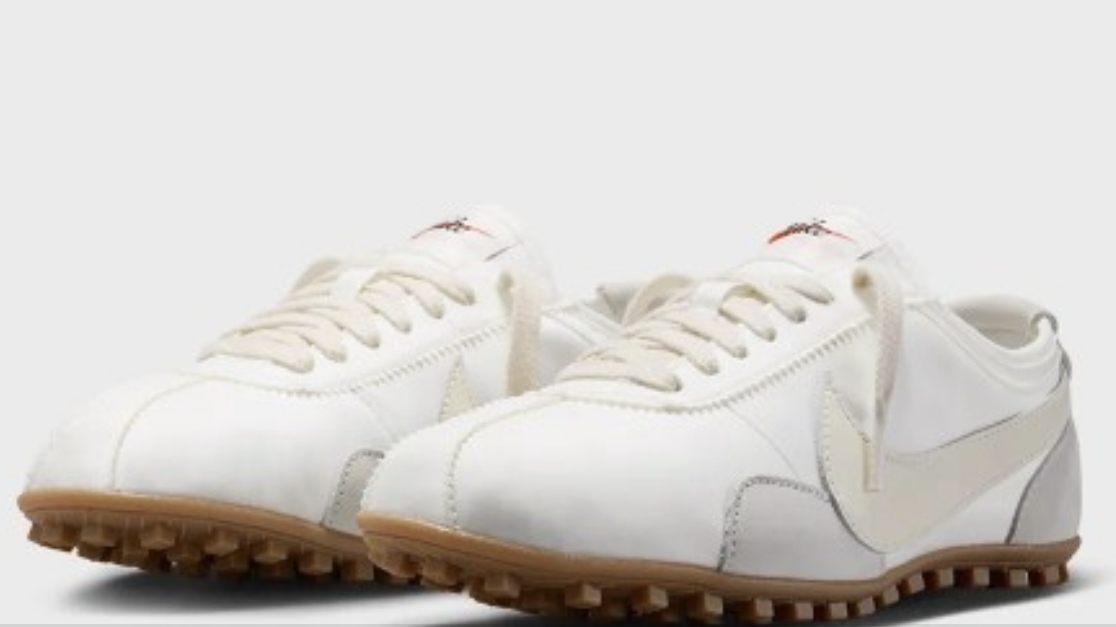
- Waffle sole: A grid-like rubber outsole created for traction and cushioning.
- Nylon upper: A lightweight and simple structure typical of early running shoes.
- Swoosh: A rough early Swoosh attached to the side, showing the handmade character of the period.
- Two-piece outsole: A detail that reflects the production methods of the time.
- Minimal branding: A reminder that Nike’s identity was still being formed.
The 2019 Sotheby’s auction
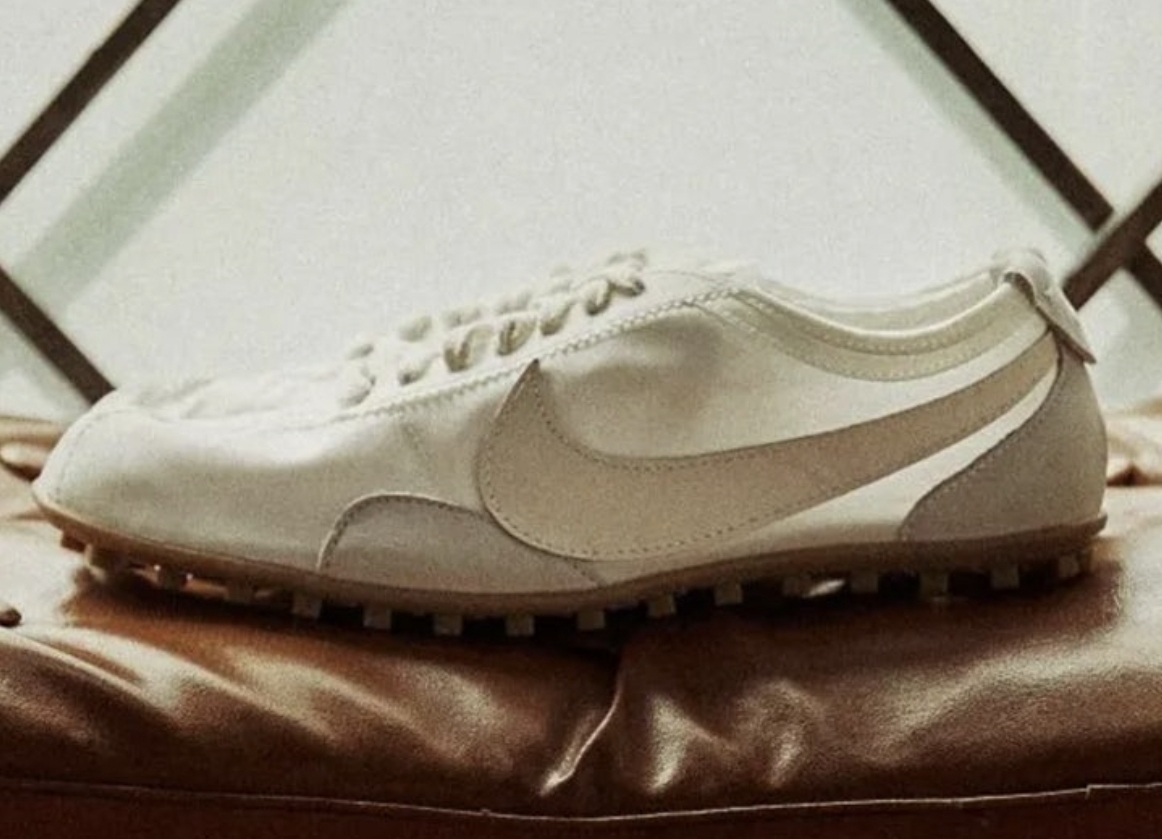
The Moon Shoe became a mainstream story through the 2019 Sotheby’s and Stadium Goods “Ultimate Sneaker Collection” auction. The 1972 Nike Waffle Racing Flat Moon Shoe was the key remaining lot and ultimately sold for $437,500.
The buyer was reported as Canadian collector Miles Spencer Nadal. The pair was described as the only known unworn example, which made the scarcity even stronger. Although later sneaker auctions reached even higher prices, the Moon Shoe still stands as a landmark case in the shift from sneakers as wearable goods to sneakers as collectible history.
Why the value became so high
The first reason is historical importance. The Moon Shoe sits close to Nike’s beginning and shows how running innovation and brand identity were connected from the start.
The second reason is scarcity. Only about 12 pairs are commonly described as having been made, and fewer are believed to remain today. Scarcity is a major driver in the collectible sneaker market.
The third reason is the unworn deadstock condition of the auctioned pair. A shoe from 1972 surviving unused is extremely unusual and has a major effect on auction value.
The fourth reason is cultural symbolism. The Moon Shoe helped show that sneakers could be collected and valued in the same broad cultural conversation as art, cars, or watches.
Common misunderstandings
- The Moon Shoe was not a standard mass-market release; it belongs to the 1972 trials and early testing context.
- The $437,500 record applied to a specific unworn pair, not every Moon Shoe.
- An original 1972 Moon Shoe is not something ordinary shoppers can easily buy at retail.
- The design is not only unusual; it carries the functional history of the waffle sole.
What to check when looking at related sneakers
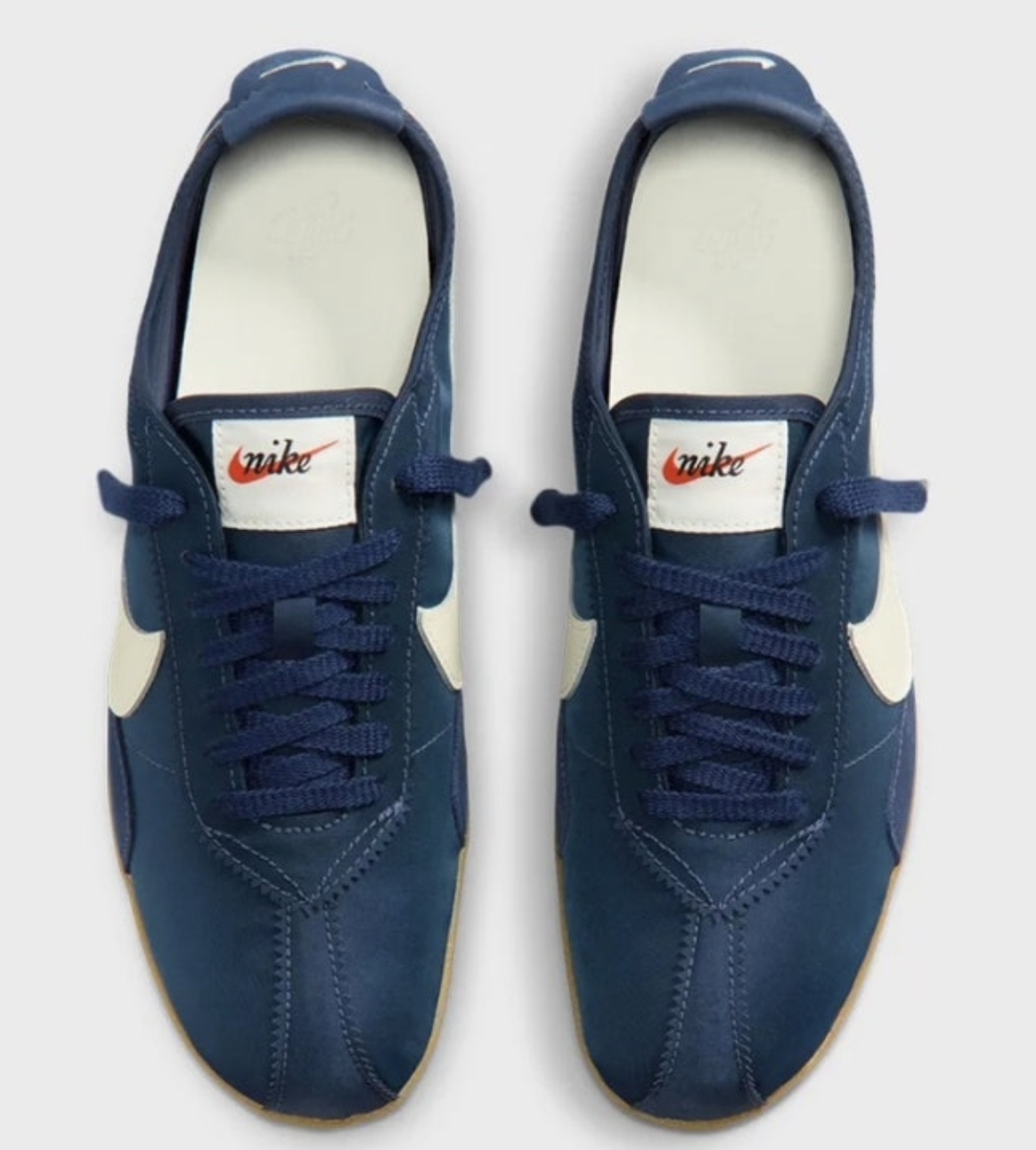
Separate originals from later models and inspirations. A 1972 original Moon Shoe, a later retro runner, and a modern waffle-sole sneaker are not the same thing. Check the release year, model name, outsole pattern, materials, and whether you are buying for wearing or collecting.
FAQ
Why is the Nike Moon Shoe so expensive?
Because it is an extremely scarce early Nike running shoe tied to the 1972 Olympic Trials, the waffle-sole innovation, and Nike’s origin story.
How many pairs were made?
Sources such as Sotheby’s commonly describe the production as about 12 pairs.
Where did the name come from?
The waffle sole left crater-like marks in dirt, which looked similar to footprints on the moon.
How much did it sell for in 2019?
It sold for $437,500 at Sotheby’s in 2019.
Can you buy an original Moon Shoe in a normal store?
No. The original 1972 Moon Shoe is closer to a collector’s artifact than a regular retail product.
Final thoughts
The Nike Moon Shoe is not just a rare sneaker. It is a record of the waffle iron experiment, the 1972 Olympic Trials, early Swoosh details, and the small-scale production that shaped Nike’s early story. Its auction result confirmed that sneakers could be treated as cultural artifacts, and its symbolism remains strong even after later record-breaking sales.
#NikeMoonShoe #NikeWaffleSole #MoonShoe #SneakerHistory #SothebysAuction #BillBowerman #WaffleSole #RetroRunningShoes #SneakerCollecting