




Korean Garlic Scape Jangajji Recipe: Crunchy Soy-Pickled Garlic Stems
Korean garlic scape jangajji is a crisp soy-pickled side dish made with young garlic stems, a sweet-salty soy brine, and a short resting time. It is one of the easiest Korean pickles to keep in the refrigerator because the ingredient list is short, the flavor is bold, and the texture stays pleasantly snappy when the steps are done carefully.
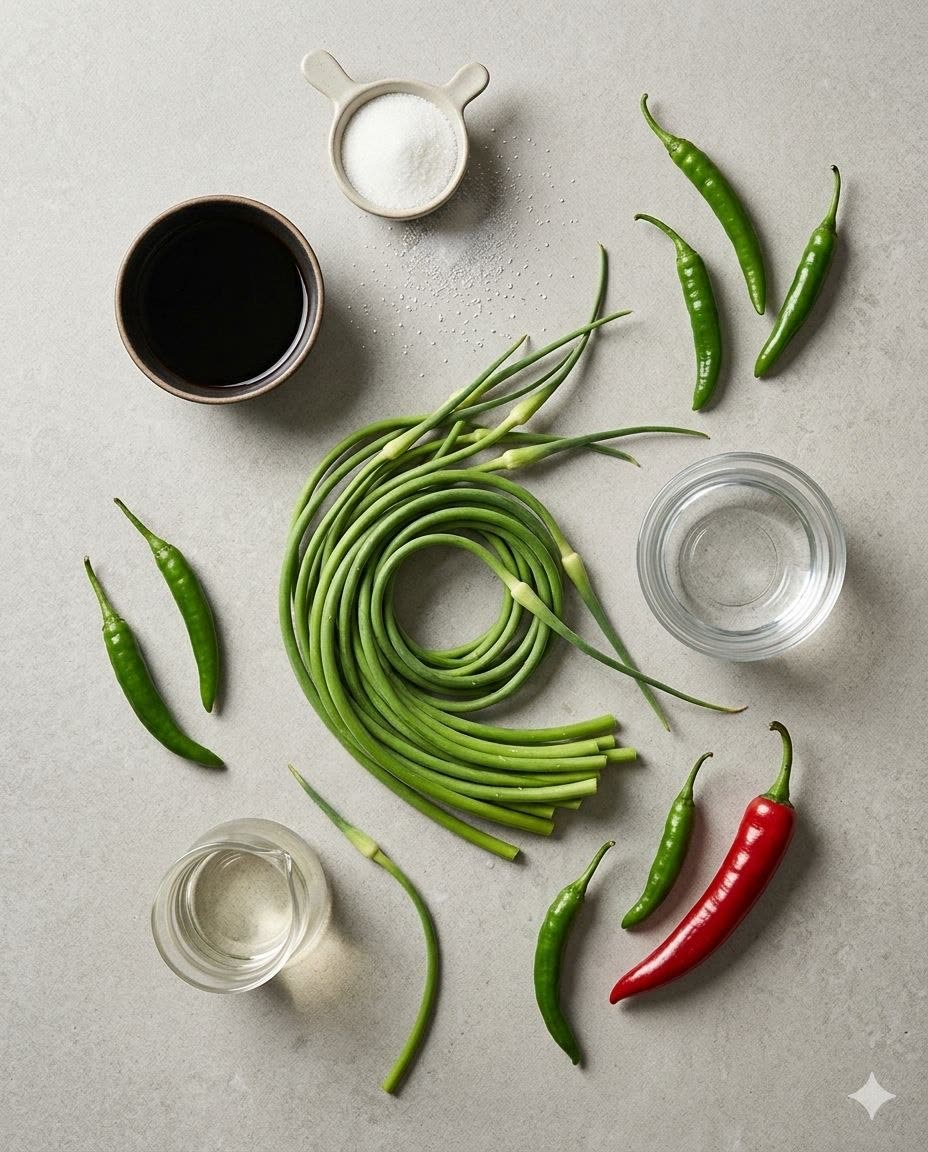
Short Answer
For a balanced garlic scape jangajji, use a brine based on soy sauce, water, sugar, and vinegar. Trim the stems, dry them well, pour the first brine while hot, then re-boil only the brine after 2 to 3 days and pour it back after it cools completely.
What Is Garlic Scape Jangajji?
Jangajji refers to Korean pickled vegetables usually seasoned with soy sauce, vinegar, sugar, and sometimes chili or aromatics. Garlic scapes are the long green stems of garlic plants. They have a mild garlic aroma, a firm bite, and a clean green flavor that works especially well in soy-based pickles.
This recipe is useful when you want a make-ahead banchan for rice bowls, grilled meat, noodles, simple lunch boxes, or a quick side dish on busy weekdays.
Ingredients
| Ingredient | Amount | Notes |
|---|---|---|
| garlic scapes | 500 g | Trim tough ends and cut into 4–5 cm pieces. |
| soy sauce | 1 cup | Use regular Korean-style dark soy sauce or all-purpose brewed soy sauce. |
| Water | 1 cup | Balances saltiness. |
| Sugar | 3/4 cup | Adjust slightly to taste, but do not remove it completely. |
| Vinegar | 3/4 cup | Add near the end to keep the sharp flavor clean. |
| Chili peppers | Optional | Use green or red chilies for aroma and color. |
| glass jar | 1 clean jar | Heat-sterilize and dry fully before filling. |
How to Make Korean Garlic Scape Jangajji
1. Trim and wash the garlic scapes
Cut off the dry ends and any tough flower-stem sections. Slice the stems into comfortable bite-size pieces, about 4 to 5 cm long. Rinse well, then drain thoroughly.
The drying step matters. If too much water remains on the stems, the brine becomes diluted and the pickles can lose flavor faster.
2. Pack the jar
Place the garlic scapes and optional sliced peppers into a clean, fully dried jar. Do not pack the jar so tightly that the brine cannot move around the stems.
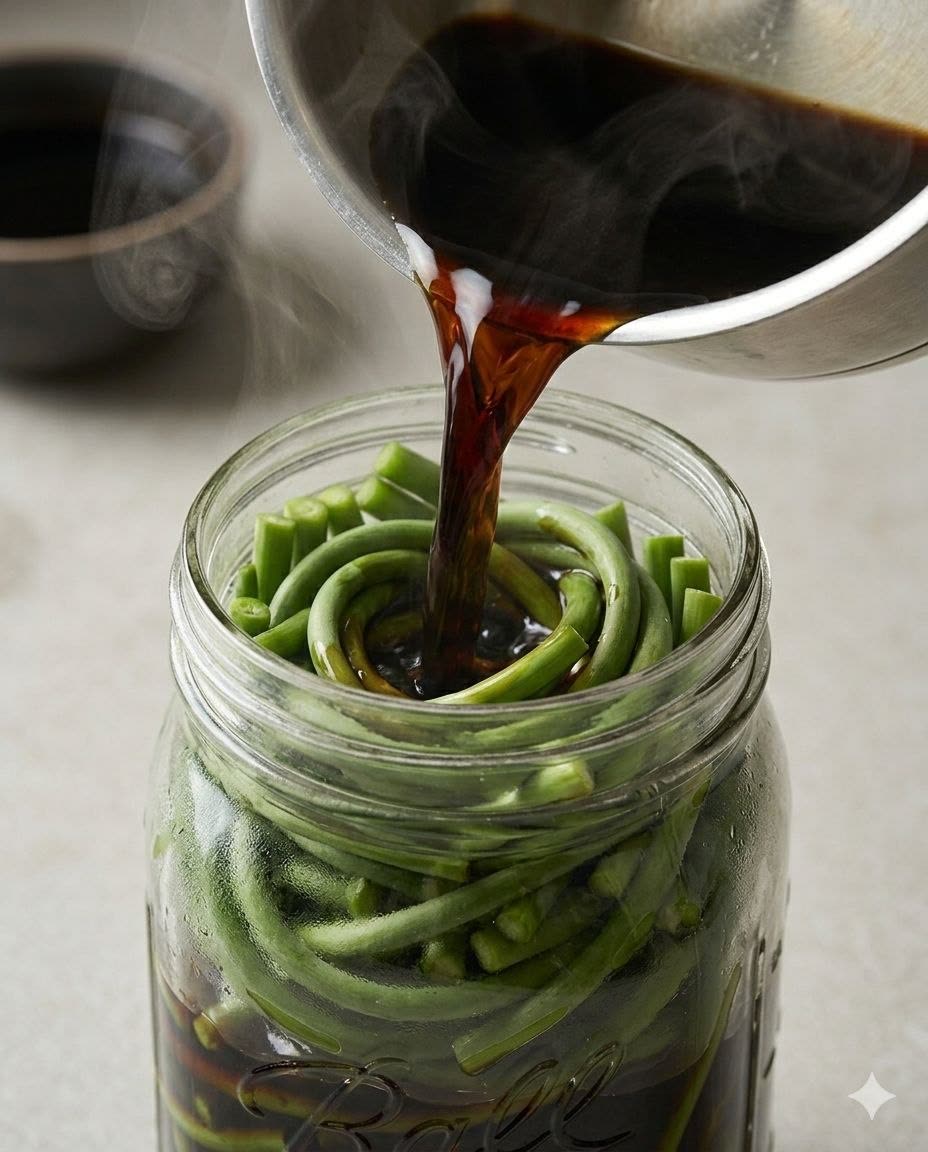
3. Boil the soy brine
Combine soy sauce, water, and sugar in a pot. Bring it to a boil and stir until the sugar dissolves. Turn off the heat, then add the vinegar. This keeps the vinegar flavor cleaner and prevents it from becoming too harsh.
4. Pour the first brine while hot
Pour the hot brine directly over the garlic scapes in the jar. Press the stems down gently so they are covered. Let the jar cool at room temperature, then refrigerate.
5. Re-boil the brine for longer storage
After 2 to 3 days, pour out only the brine into a pot. Bring it to a boil again, let it cool completely, and pour it back over the garlic scapes. This extra step helps the pickles keep better and gives the flavor a cleaner finish.
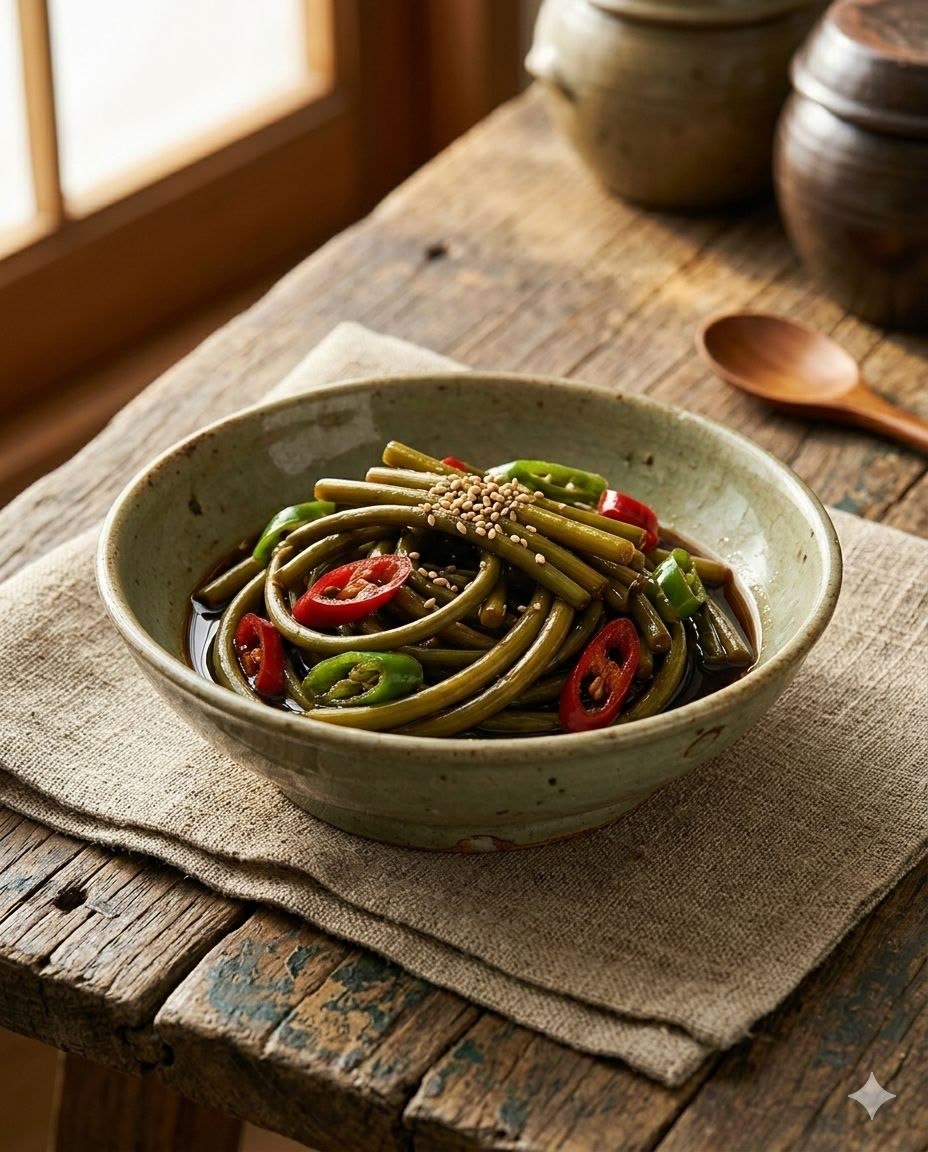
When Can You Eat It?
You can taste the garlic scape jangajji after 2 to 3 days, but it usually becomes better after about one week in the refrigerator. The stems should taste salty, lightly sweet, tangy, and crisp, with a gentle garlic aroma.
Texture Tips for Crunchy Garlic Scapes
- Use fresh, firm garlic scapes rather than wilted stems.
- Dry the washed stems completely before packing the jar.
- Pour the first brine while hot, but cool the re-boiled brine fully before the second pour.
- Keep the stems covered under the brine during storage.
- Use clean utensils every time you take some out.
How to Serve It
Garlic scape jangajji is excellent with hot rice, pork belly, grilled beef, Korean fried rice, gimbap, noodle dishes, and simple home meals. Chop it finely and use it as a salty-tangy topping for rice bowls, or serve it whole as a crunchy side dish.
FAQ
How long does garlic scape jangajji last?
If the jar is clean, the stems stay covered with brine, and the pickles are refrigerated, it can usually be kept for several weeks. Always check smell, surface condition, and texture before eating.
Can I reduce the vinegar?
You can adjust it slightly, but vinegar is important for both flavor and storage stability. Reducing it too much is not recommended.
Do I have to re-boil the brine?
If you plan to eat the pickles quickly, some people skip this step. For cleaner flavor and longer storage, re-boiling only the brine after 2 to 3 days is recommended.
What if mold, foam, or a strange smell appears?
Do not simply scrape the surface and continue eating. If you see mold, unusual bubbles, sliminess, or an off smell, it is safer to discard it.
This post may contain affiliate links. As part of affiliate activity, I may receive a small commission if a purchase is made, at no extra cost to you.