




Japchae tastes best when the glass noodles stay springy and glossy, even after cooling. The key is not just the sauce but the order of boiling, rinsing, seasoning, and stir-frying.
Japchae Golden Recipe
Korean Glass Noodles That Do Not Turn Soggy
This recipe focuses on chewy glass noodles, balanced soy-sesame seasoning, and separately cooked vegetables so the dish stays neat and flavorful the next day.
Many home cooks make japchae that tastes good at first but becomes soft, bland, or watery later. That usually happens when the noodles are overcooked, left too wet, or mixed without absorbing enough seasoning.
Basic information
| Dish | Japchae, Korean stir-fried glass noodles |
|---|---|
| Main ingredient | Sweet potato glass noodles |
| Flavor base | Soy sauce, sesame oil, sugar, garlic, pepper |
| Texture goal | Chewy, glossy noodles that do not clump or turn soggy |
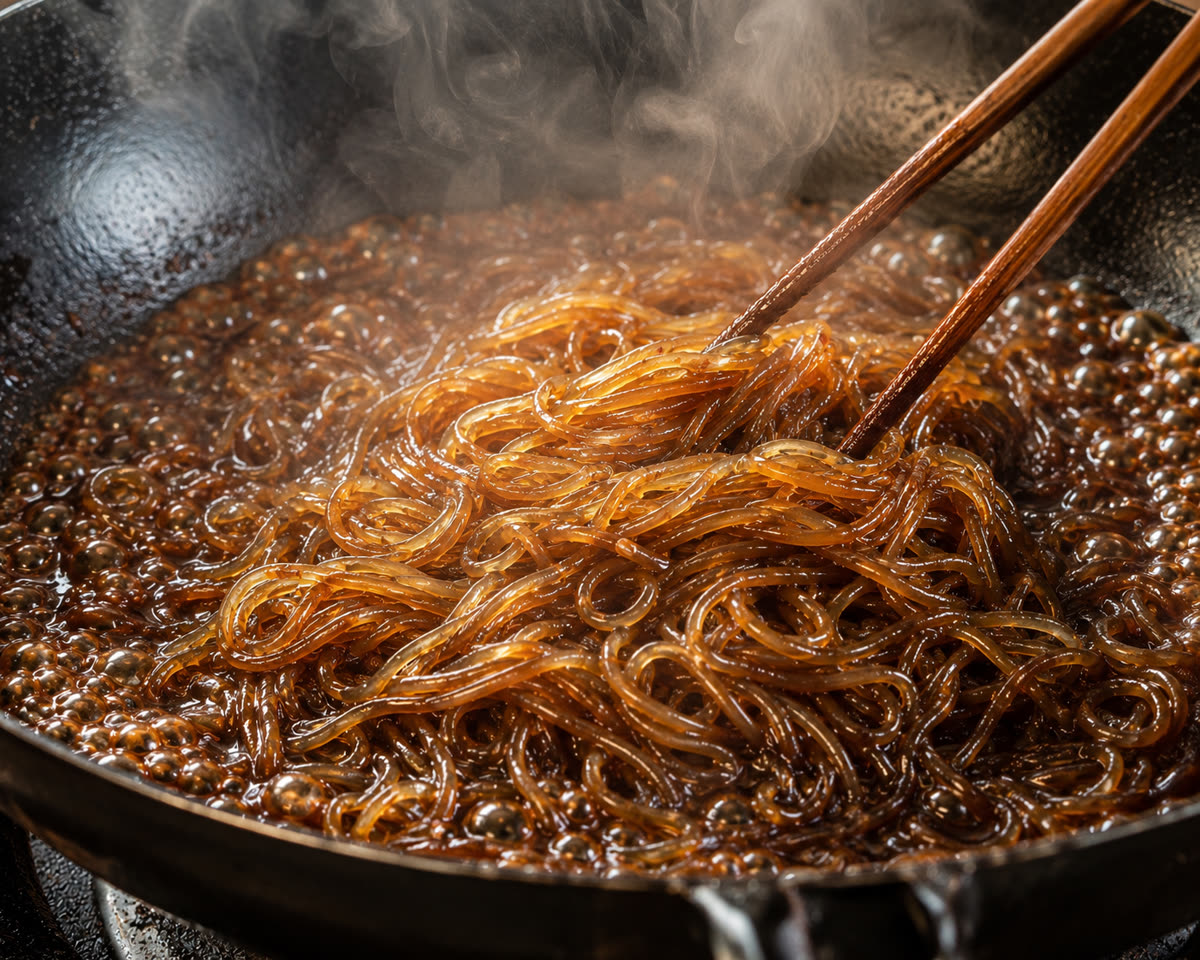
For japchae that does not get soggy, boil the noodles until just chewy, rinse and drain well, then simmer them briefly with soy-based seasoning so the flavor is absorbed into the noodles instead of sitting outside them.
Why japchae gets soggy
The biggest reason is excess water. If the noodles are overboiled or not drained well, the sauce becomes diluted and the texture weakens. Another reason is mixing all ingredients at once before each part is properly seasoned.
Cooking vegetables separately also matters. Spinach, mushrooms, onion, carrot, and meat release different amounts of moisture, so treating them separately keeps the final bowl cleaner.
Ingredient notes
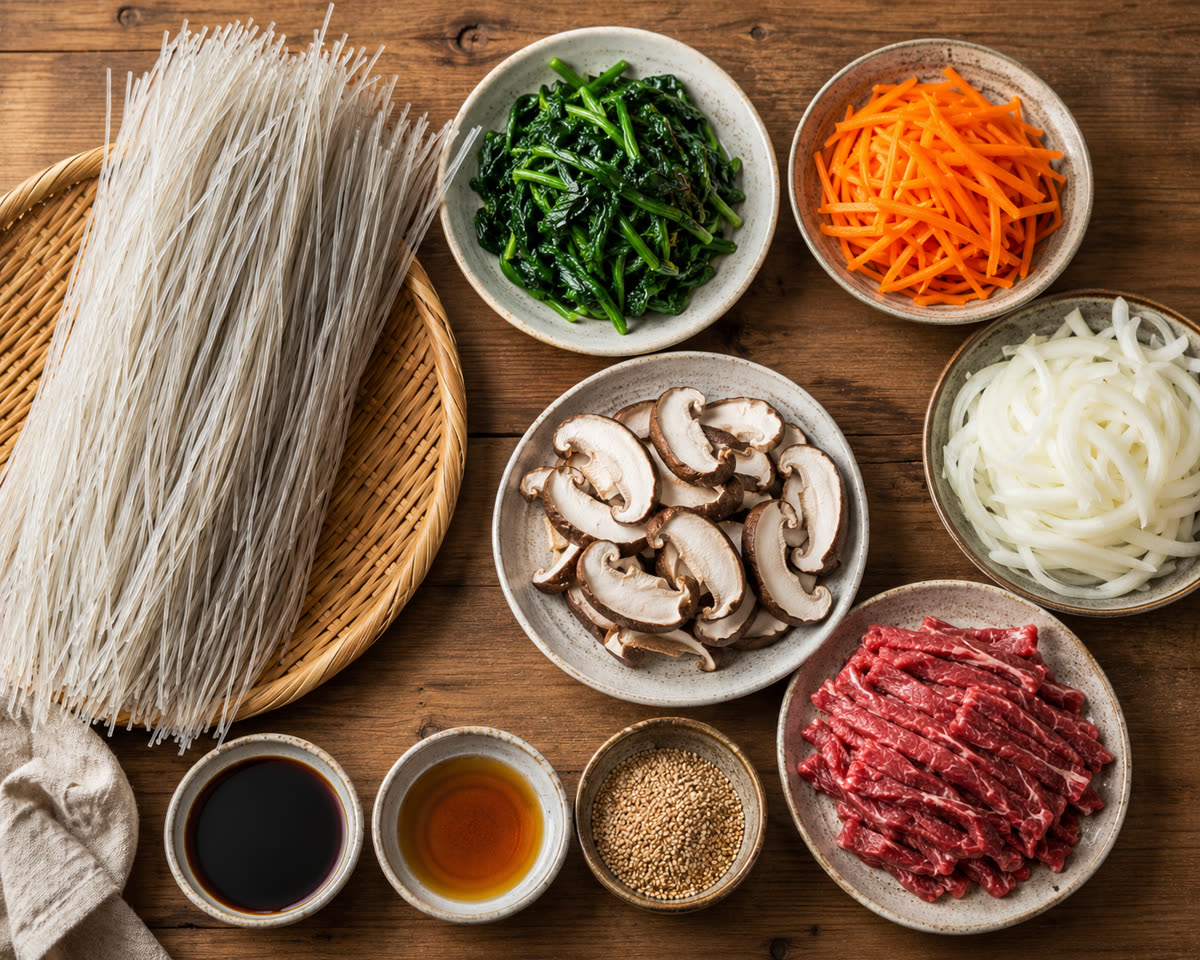
| glass noodles | The center of the recipe. Cook until chewy, not mushy. |
|---|---|
| soy sauce | Builds the salty-sweet base. |
| sesame oil | Adds aroma at the end. |
| spinach | Adds color and freshness. |
| mushrooms | Add savory flavor and texture. |
Cooking method
First, prepare the vegetables and meat separately. Season lightly so each ingredient has its own flavor without releasing too much liquid into the final mixture.
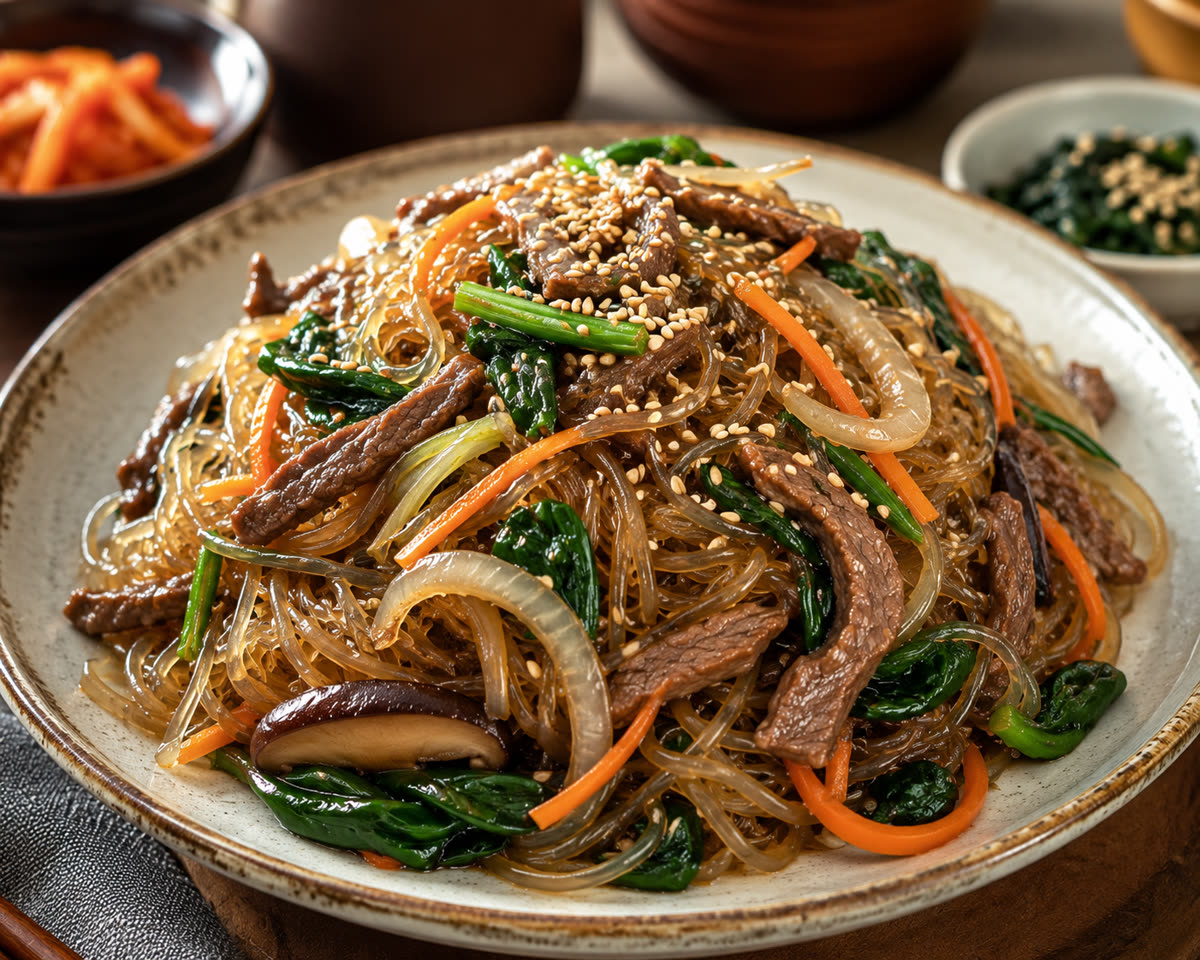
Boil the glass noodles, rinse quickly, drain thoroughly, then place them in a pan with the seasoning. Simmer and toss until the sauce is absorbed and the noodles look glossy.
Finally, combine the seasoned noodles with the cooked vegetables and meat. Add sesame oil and sesame seeds near the end so the aroma stays fresh.
Common problems and fixes
| Soggy noodles | Boil less, drain better, and let the seasoning absorb in the pan. |
|---|---|
| Bland flavor | Season the noodles directly instead of relying only on the mixed vegetables. |
| Clumped noodles | Toss with a little sesame oil after seasoning and avoid overcooling in one lump. |
| Watery japchae | Cook wet vegetables separately and squeeze spinach well. |
Final note
Good japchae is about balance: chewy noodles, lightly seasoned vegetables, enough soy-sesame aroma, and controlled moisture. Once the noodles absorb the sauce properly, the dish stays much better even after cooling or reheating.
More Korean home-cooking ideas
#Japchae #KoreanGlassNoodles #KoreanRecipe #KoreanFood #KCulture #HomeCooking