




If you want soft-boiled eggs at home with moist yolks and springy whites like the ones from a convenience store, timing matters more than guesswork. Because even a small difference such as 6 minutes 10 seconds can change the texture of the yolk, the key is to be precise about when the water reaches a boil and when the eggs go into ice water.
Korean Soft-Boiled Eggs Recipe: Jammy Yolks in 6 Minutes 10 Seconds
With just 6 eggs, 1 L of water, 1 tablespoon of coarse salt, and 1 tablespoon of vinegar, you can make soft-boiled eggs at home with bouncy whites and moist yolks. Do not put eggs straight from the refrigerator into the pot; let the chill come off for at least about 10 minutes, then transfer them to ice water immediately after boiling to stop carryover cooking.
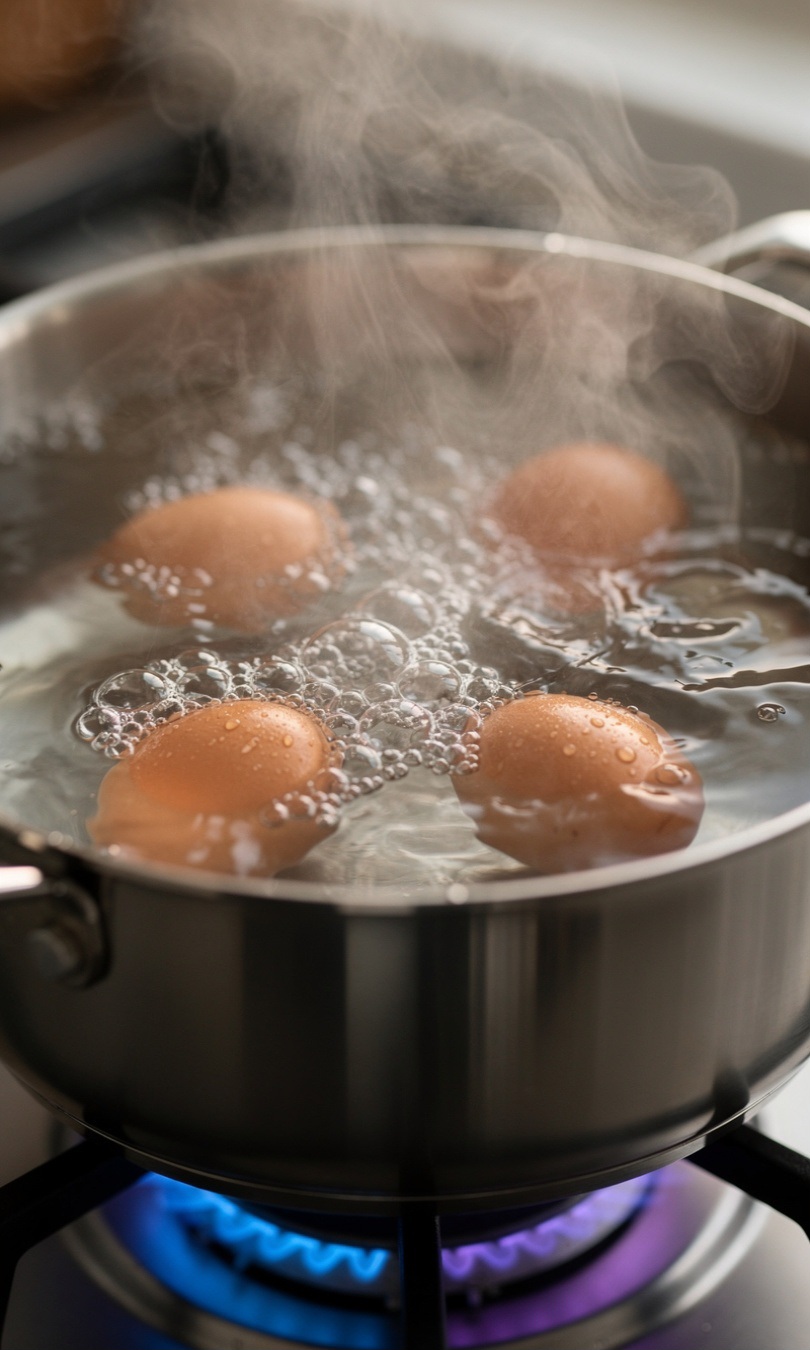
This recipe is a home-style method aimed at the lightly salty, moist texture of packaged soft-boiled eggs sold in stores. However, commercial products go through separate brining and refrigerated distribution processes, so it is difficult to make them taste exactly the same by simply boiling eggs in salted water at home. Still, if you get the cooking time and cooling right, you can make the yolk texture very similar.
Soft-boiled eggs are different from hard-boiled eggs, which are cooked until the yolk is fully firm. For children, pregnant women, older adults, and people with weakened immune systems, fully cooked hard-boiled eggs with firm yolks and whites are the safer choice.
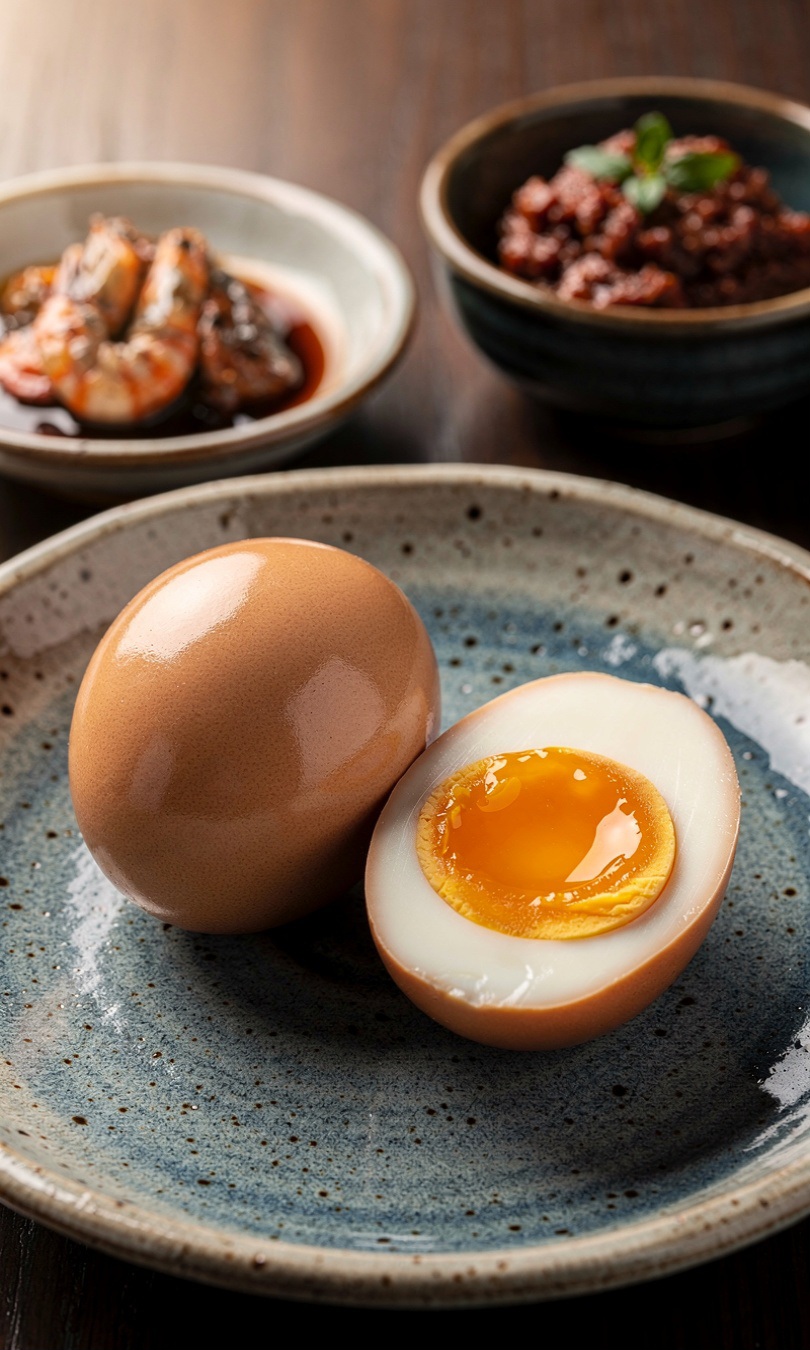
Basic Information for Mayak-Style Soft-Boiled Eggs
Ingredients and Measurements
Basic Ingredients
- 6 fresh eggs
- 1 L water
- 1 tablespoon coarse salt
- 1 tablespoon vinegar
- Plenty of ice water
The role of salt and vinegar
Salt lightly seasons the water and helps reduce how much the egg white spreads if the shell cracks. Vinegar can also help egg white proteins coagulate quickly, so it is used to reduce excessive leaking if tiny cracks form during boiling.
Taking the chill off the eggs
If you put eggs straight from the refrigerator into boiling water, the temperature difference can crack the shells. Letting them sit at room temperature for at least about 10 minutes before cooking helps reduce cracking and makes it easier to set the texture of the whites evenly. However, on hot days, it is safer not to leave them at room temperature for a long time.
6-Minute-10-Second Soft-Boiled Method
Add water, salt, and vinegar to a pot
Add 1 L of water, 1 tablespoon of coarse salt, and 1 tablespoon of vinegar to a pot. Use a pot large enough for 6 eggs to sit submerged in a single layer; this helps the heat distribute evenly and reduces cracking from the eggs bumping into one another.
Heat until the water reaches a rolling boil
Bring the water to a full boil over high heat. When bubbles are rising continuously, lower the heat slightly to about medium-high, then carefully add the eggs one at a time using a ladle or spoon.
Time 6 minutes 10 seconds from the moment the eggs go in
Start the timer the moment the eggs enter the water. 6 minutes 10 seconds is the timing for a moist yolk. If the water boils too violently and the eggs knock around, the shells can crack, so avoid a boil strong enough to shake the eggs aggressively.
Gently stir in one direction for about the first minute
If you want the yolks to sit in the center, gently stir in one direction for only about the first minute after boiling begins. There is no need to stir continuously from start to finish. Stirring too hard can crack the shells, so a gentle motion along the edge of the pot is best.
Transfer to ice water immediately when time is up
At 6 minutes 10 seconds, remove the eggs right away and place them in ice water. If this step is delayed, carryover heat will continue cooking the yolks. Cooling completely in ice water for 10 minutes makes the eggs easier to peel and helps stabilize the soft-boiled texture.
Peel slowly starting from the rounded end
The rounded end of the egg has an air pocket, making it a good place to start peeling. After the eggs have cooled thoroughly in ice water, gently roll each egg to create fine cracks, then peel slowly under running water or in a bowl of water to reduce tearing the white.
Timing Chart by Yolk Texture
| Boiling time | Yolk texture | Recommended uses | Notes |
|---|---|---|---|
| 5 minutes 50 seconds | Close to a runny yolk | Ramen, rice bowls, toast | Hard to peel and lower in food safety |
| 6 minutes 10 seconds | Moist, rich soft-boiled yolk | Mayak-style snack eggs, salads, diet meals | May vary depending on egg size and how chilled the eggs are |
| 6 minutes 30 seconds | Jammy soft-boiled yolk | Lunch boxes, sandwiches, bibim noodle topping | The outer edge of the yolk becomes a bit firmer |
| 7 minutes | Soft-boiled with only the center moist | Easy-to-peel soft-boiled eggs, beginner-friendly | The yolk feels more cooked than Mayak-style eggs |
| 10 minutes or more | Hard-boiled | Children, pregnant women, older adults, long-storage lunch boxes | The yolk may become dry and crumbly |
Increase the time slightly for extra-large or jumbo eggs.
Larger eggs need more time for the heat to reach the center. If 6 minutes 10 seconds based on large eggs turns out too loose, adjust next time by adding about 15 to 30 seconds.
Eggs used straight from the refrigerator can vary more.
Letting the chill come off at room temperature for at least about 10 minutes reduces cracking and makes the boiling time more consistent. In summer, however, do not leave eggs at room temperature for a long time; take out only what you need and cook them right away.
Conditions for Easy Peeling
Let the chill come off before adding
Cold eggs added directly to boiling water are more likely to crack. Letting them sit for at least about 10 minutes before cooking reduces the temperature difference and helps prevent cracking.
Boil the water first
Adding the eggs to boiling water and then timing them gives you a consistent cooking standard. If you start in cold water, the yolk texture can change depending on how long the water takes to boil.
10 minutes in ice water
Ice water stops carryover cooking and helps separate the shell from the white. Cold water with plenty of ice is more reliable than lukewarm water.
Start peeling from the rounded end
Starting from the rounded end where the air pocket is located makes it easier to catch the membrane under the shell. Since soft-boiled egg whites are delicate, peeling slowly is important.
When You Want a Salty Flavor All the Way Through
Salt in the boiling water alone does not deeply season the inside.
When the shell is still on, salt water does not quickly penetrate all the way to the yolk. So if you want the inside to taste salty like store-bought soft-boiled eggs, it is more realistic to peel the eggs after boiling and serve them with salt, or briefly rest them in a light salt brine under refrigeration.
Simple home method
The easiest way is to peel the soft-boiled eggs and sprinkle on a very small amount of fine salt or seasoned salt. Rather than keeping them for lunch boxes or storage, it is best to treat them as a snack to eat soon after cooking.
Causes of Failure and Fixes
| Problem | Possible cause | Solution |
|---|---|---|
| Shells crack during boiling | Refrigerated eggs were added right away; water is boiling too hard | Let sit at room temperature for 10 minutes, add carefully with a ladle, maintain medium-high heat |
| Yolks are too runny | Eggs are large or the water temperature dropped | Add 15 to 30 seconds next time |
| Yolks are overcooked | Ice-water transfer was delayed or boiling time was too long | Use a timer, transfer immediately to ice water for 10 minutes when time is up |
| Whites tear | Eggs were peeled before cooling thoroughly | Cool in ice water for 10 minutes, peel slowly from the rounded end |
| Yolks are off-center | Eggs stayed fixed in place early in boiling | Gently stir in one direction for only the first minute |
Food Safety Notes for Soft-Boiled Eggs
Soft-boiled eggs are not fully cooked foods.
Eggs with moist yolks require more food-safety caution than hard-boiled eggs. Do not use cracked or contaminated eggs, and keep hands and cooking tools clean before and after cooking.
Vulnerable groups should choose hard-boiled eggs.
For infants and young children, pregnant women, older adults, and immunocompromised people, it is safer to choose hard-boiled eggs with both yolks and whites cooked until firm. Eat soft-boiled eggs as soon as possible after cooking, and do not leave them at room temperature for long periods.
Delicious Ways to Eat Them
Eat as a snack
After peeling, dip the egg in a very small amount of fine salt to easily create the lightly salty flavor of Mayak-style eggs.
Ramen topping
A 6-minute-10-second soft-boiled egg goes well with ramen because the yolk softens into the broth. Since the soup is hot, add it right before eating.
Salad topping
Adding one to a chicken breast salad or cabbage salad gives extra protein and richness. When cutting the egg in half, wet the knife with water so less yolk sticks to it.
Bibim noodles or noodle topping
On bibim noodles, cold noodles, or makguksu, the moist yolk pairs well with spicy seasoning. Add the egg after it has cooled completely for a cleaner shape.
Frequently Asked Questions
Q. Does it have to be exactly 6 minutes 10 seconds?
A. For standard large eggs, 6 minutes 10 seconds is a good baseline for a moist soft-boiled texture. It can vary depending on egg size, refrigeration, pot size, and heat level, so try 6 minutes 10 seconds first and adjust by 15 to 30 seconds next time.
Q. How long should I leave eggs at room temperature?
A. Letting the chill come off for at least about 10 minutes helps reduce cracking when the eggs go into boiling water. However, in summer, do not leave them at room temperature for too long; take out only what you need and cook them.
Q. Should I keep stirring while the eggs boil?
A. There is no need to keep stirring. If you want the yolks centered, gently stirring in one direction for only about the first minute after boiling begins is enough.
Q. Do I have to add salt and vinegar?
A. They are not absolutely required, but adding them helps reduce how much egg white spreads if the shell develops tiny cracks during cooking. They do not strongly change the flavor, so you can add them without worry.
Q. Can I pack soft-boiled eggs in a lunch box?
A. Soft-boiled eggs require more care for storage and transport than hard-boiled eggs. If the lunch box will sit at room temperature for a long time, it is safer to boil the eggs until hard-boiled rather than soft-boiled.
Q. Why are the shells hard to peel?
A. Very fresh eggs, insufficient cooling, cooling in lukewarm water, or peeling too quickly can be the cause. Cool the eggs thoroughly in ice water for at least 10 minutes and peel slowly from the rounded end to reduce failures.
Final Notes
For Mayak-style moist soft-boiled eggs, timing matters more than the ingredients. Let the chill come off the eggs, add them after the water boils, time exactly 6 minutes 10 seconds, then transfer them straight to ice water so the yolks do not overcook.
The first time you make them, the result may be a little different from your target texture because of egg size and heat level. If the yolks are too runny, add 15 to 30 seconds next time; if they are too cooked, reduce the time by 10 to 20 seconds. Once you find the timing that fits your pot at home, you can consistently make soft-boiled eggs that are moist and springy like convenience-store soft-boiled eggs.
Cooking Note
This recipe is a home-style method aimed at a moist soft-boiled texture. If food safety is your top priority, cook the eggs until both the yolks and whites are fully firm.