




Even when the table feels a little empty, one container of jangjorim can make a meal feel complete. Put a soy-braised quail egg over warm rice, spoon a little sauce on top, and dinner suddenly becomes easier. The tricky part is keeping the eggs from turning too salty or rubbery. This Korean quail egg jangjorim with shishito peppers stays moist and glossy when the simmering time and ingredient order are right.
Quail egg jangjorim is a practical Korean banchan made with store-bought peeled quail eggs, soy sauce, water, sugar, cooking wine, and a small finishing touch of corn syrup or oligosaccharide syrup. The key is not to over-simmer the eggs. Add the peppers and syrup near the end so the color, aroma, and shine stay fresh.
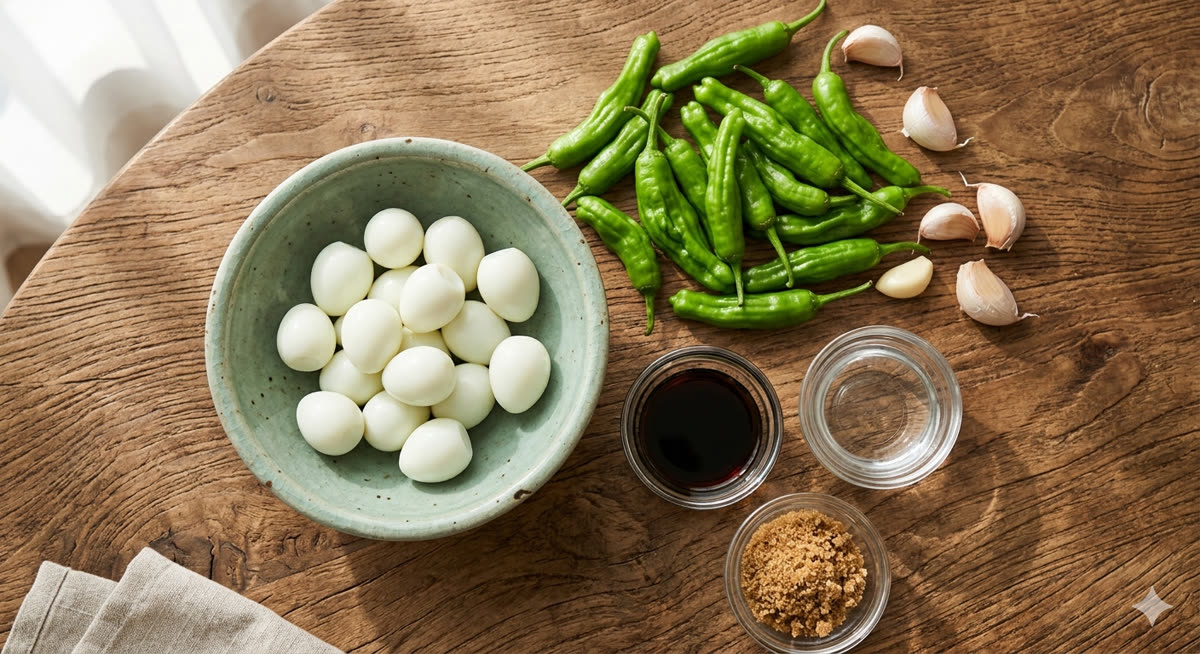
In Korean home cooking, mechuari-al jangjorim is one of the most useful side dishes. It works for lunch boxes, kids’ meals, quick rice bowls, and busy weeknight dinners. Adding shishito peppers gives the sweet-salty soy sauce a gentle green aroma that makes the dish feel more balanced for adult tastes too.
Small timing differences change the final result. Too much soy sauce makes the dish harshly salty. Too much heat makes the eggs firm. Adding syrup too early can make the sauce sticky instead of glossy, and adding the peppers from the beginning turns them dull and soft.
This version uses 500 g of peeled quail eggs as the base. Use only 1/2 cup of Korean-style soy sauce with 2 cups of water, add sugar at the beginning, and finish with syrup at the end. The peppers go in during the last minute or two so they keep their color and scent.
Storage matters as well. Even though jangjorim is simmered in soy sauce, it should not sit at room temperature for long. Cool it down, transfer it to an airtight food container, and refrigerate it with enough sauce to keep the eggs moist.
Basic information
| Dish | Korean quail egg jangjorim with shishito peppers |
|---|---|
| Type | Korean side dish, lunch-box side, kids’ side dish |
| Yield base | 500 g peeled quail eggs |
| Cooking time | About 15–20 minutes |
| Flavor point | Not too salty, sweet-savory soy sauce, glossy finish, pepper aroma |
| Storage | Refrigerate in an airtight container with the sauce |
| Main tip | Add syrup and peppers near the end, and leave a little sauce in the pan |
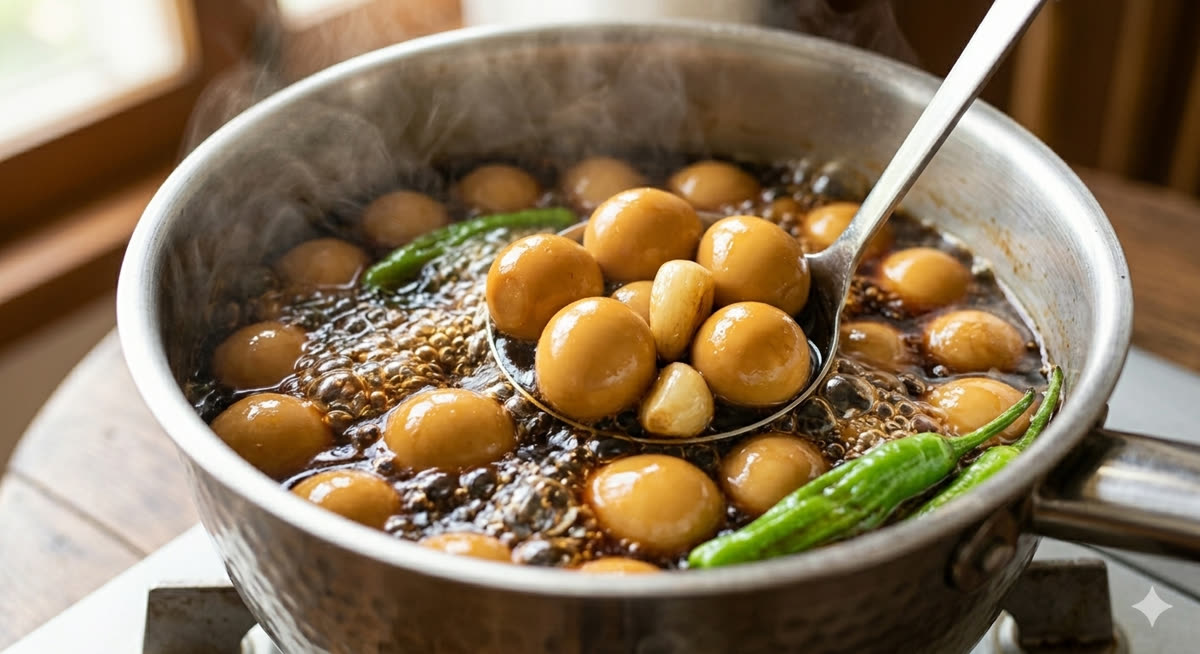
For 500 g peeled quail eggs, boil 2 cups water, 1/2 cup soy sauce, 2 tablespoons cooking wine, and 2 tablespoons sugar. Add the quail eggs and garlic, then simmer over medium-low heat for 10–15 minutes. When the sauce is reduced but still moist, add shishito peppers for 1–2 minutes. Turn off the heat and stir in syrup for a glossy finish.
Key points for better jangjorim
First, rinse store-bought peeled quail eggs. Drain the liquid from the package and rinse the eggs gently two or three times with cold water. This keeps the flavor clean before they go into the sauce.
Second, separate the role of sugar and syrup. Sugar goes into the sauce early so the sweetness can blend in. Syrup or oligosaccharide goes in at the end to create shine. If it goes in too early, the sauce can thicken too much and stick to the pan.
Third, add shishito peppers at the end. If the peppers cook for too long, they lose color and texture. A short 1–2 minute simmer is enough to release their aroma while keeping them fresh-looking.
Fourth, do not reduce the sauce until dry. A little sauce should remain so the eggs stay moist in the refrigerator. Store the eggs together with the remaining sauce.
Ingredients
| Ingredient | Amount | Purpose |
|---|---|---|
| Peeled quail eggs | 500 g | Main ingredient |
| Shishito peppers | About 15 pieces | Aroma, color, mild pepper flavor |
| Whole garlic cloves | 10 cloves | Depth and aroma |
| Kombu | 1 small 5 cm piece, optional | Extra savory flavor |
Soy sauce ratio
| Seasoning | Amount | When to add |
|---|---|---|
| Water | 2 cups, about 400 ml | From the beginning |
| Soy sauce | 1/2 cup, about 100 ml | From the beginning |
| Cooking wine | 2 tablespoons | From the beginning |
| Sugar | 2 tablespoons | From the beginning |
| Corn syrup or oligosaccharide syrup | 2 tablespoons | Right before turning off the heat |
How to make Korean quail egg jangjorim
1. Rinse the quail eggs
Drain the liquid from the package and rinse the peeled quail eggs two or three times with cold water. Handle them gently so the surface does not break.
2. Prepare the peppers and garlic
Remove the pepper stems, rinse the peppers, and poke one or two tiny holes with a toothpick or fork. This helps the sauce reach the inside. Trim the garlic cloves and cut large cloves in half if needed.
3. Boil the sauce first
In a medium pot, add water, soy sauce, cooking wine, sugar, and kombu. Bring it to a boil over high heat and stir once or twice so the sugar dissolves.
4. Add the eggs and garlic
When the sauce starts boiling, add the quail eggs and garlic. Remove the kombu after about 5 minutes so the broth does not become overly heavy.
5. Simmer over medium-low heat
Reduce the heat and simmer uncovered for 10–15 minutes. Roll the eggs gently from time to time so they take on color evenly. The sauce should reduce to about one-third of its original amount but should not disappear completely.
6. Finish with peppers and syrup
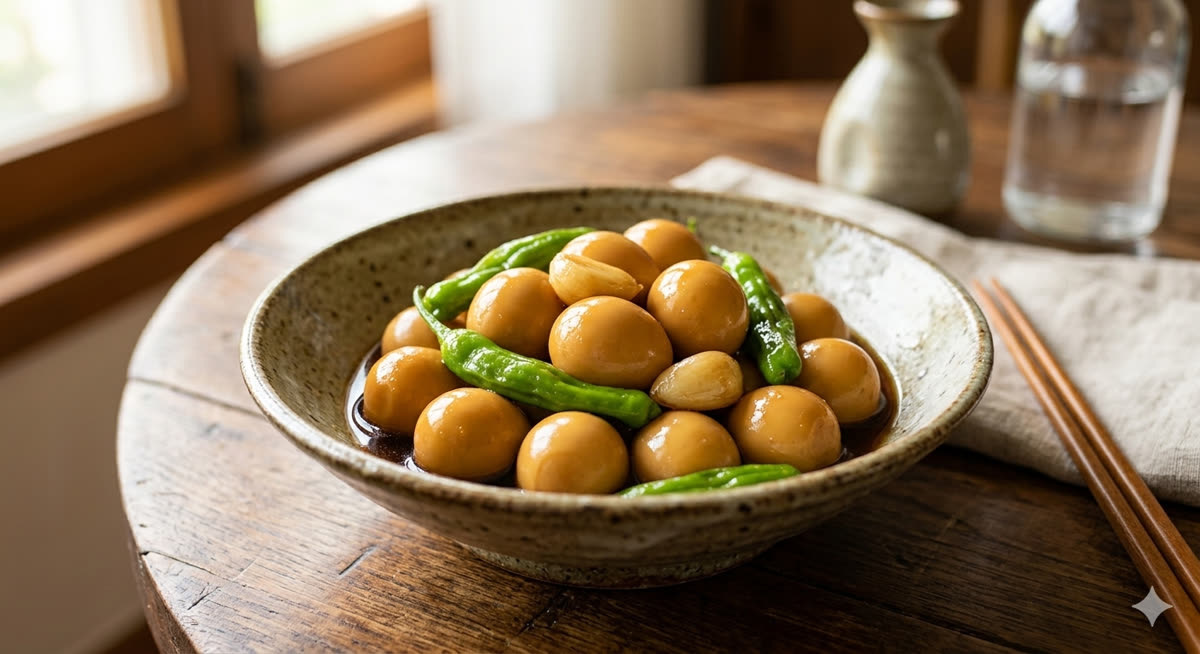
When the sauce is reduced and glossy, add the shishito peppers and cook for only 1–2 minutes. Turn off the heat, drizzle in the syrup, and stir lightly. Do not overmix, because the peppers can soften quickly.
Common problems and fixes
| Problem | Likely reason | Fix |
|---|---|---|
| Too salty | Too much soy sauce or the sauce was reduced too far | Use the 2 cups water to 1/2 cup soy sauce ratio and leave some sauce in the pan |
| Rubbery eggs | Cooked too long over high heat | Simmer over medium-low heat and stay within 10–15 minutes |
| No glossy finish | Syrup was skipped or added too early | Add syrup right before turning off the heat |
| Soft, dull peppers | Peppers were added too early | Add peppers only during the last 1–2 minutes |
| Dry after refrigeration | Stored without enough sauce | Store the eggs together with the braising liquid |
Extra tips
Add shiitake mushrooms for deeper flavor. Soaked dried shiitake mushrooms add a meaty aroma without using meat. If you use some soaking liquid, adjust the total water amount so the sauce does not become too strong.
Skip hot chili peppers for kids. Shishito peppers alone are usually enough for aroma. If you want a spicier adult version, add one or two sliced hot peppers.
Use sesame oil only when serving. Adding sesame oil to the whole batch before storage can make the flavor heavy. A drop or two over rice right before eating tastes cleaner.
Use leftover sauce carefully. The soy sauce liquid can season rice, fried rice, potato braise, or fish cake stir-fry. Reboil it before reuse, and discard any sauce that has been stored too long.
Storage and safety
Cool the finished jangjorim, place it in an airtight container, and pour in the remaining sauce. Avoid leaving it at room temperature for long; refrigerate it within about two hours after cooking.
For home cooking, it is best to eat this side dish within 3–5 days. Use a clean spoon or tongs each time. If you notice an unusual smell, sliminess, bubbles, mold, or a strange texture, discard it regardless of the date.
FAQ
Q. What should I do if quail egg jangjorim is too salty?
A. Remove part of the sauce, add a little water, and briefly simmer it again. Next time, keep the 2 cups water to 1/2 cup soy sauce ratio and avoid reducing the liquid too far.
Q. Do I have to add shishito peppers?
A. No. You can leave them out, especially for kids. However, the peppers add color, aroma, and a more balanced adult-style flavor.
Q. Can I use oligosaccharide syrup instead of corn syrup?
A. Yes. Both are used for shine and a light coating. Add them at the end rather than from the beginning.
Q. Can I use quail eggs I boiled myself?
A. Yes. Peel them carefully and use the same sauce ratio. Try not to damage the surface so the finished eggs look neat.
Q. How long can I keep it in the refrigerator?
A. It depends on the cooking and storage conditions, but 3–5 days is a safe home-cooking guideline. If anything smells or looks off, throw it away.
Final note
Korean quail egg jangjorim is simple, but the order matters. Simmer the eggs gently, add the peppers near the end, and finish with syrup only after the sauce has reduced. That is how the eggs stay tender and the sauce stays glossy.
If you want a less salty version, use enough water and do not reduce the sauce completely. Store the finished eggs with the sauce so they stay moist in the refrigerator.
When you need a dependable Korean side dish, one pack of peeled quail eggs and a handful of shishito peppers can turn into a rice-friendly banchan that works for lunch boxes, quick dinners, and everyday home meals.