




Jeyuk bokkeum is the spicy Korean pork stir-fry often served at driver-style restaurants in Korea. The ingredients are familiar, but the result depends heavily on moisture control, high heat, and the order in which the sauce is added.
Jeyuk Bokkeum Golden Recipe
Spicy Korean Pork Stir-Fry
This version uses thinly sliced pork shoulder or front leg meat with onion, green onion, and a gochujang-based sauce. The goal is a glossy, spicy-sweet stir-fry with a slightly smoky edge rather than a watery pan of boiled pork.
At home, jeyuk bokkeum can taste different from a restaurant version because a home pan often releases more liquid. If the meat is crowded or the sauce is added too early, the pork steams instead of browning.
The practical solution is simple: drain excess moisture from the pork, sear it first over strong heat, then add the sauce after the meat has started to brown. This keeps the sauce thick and helps the seasoning cling to the pork.
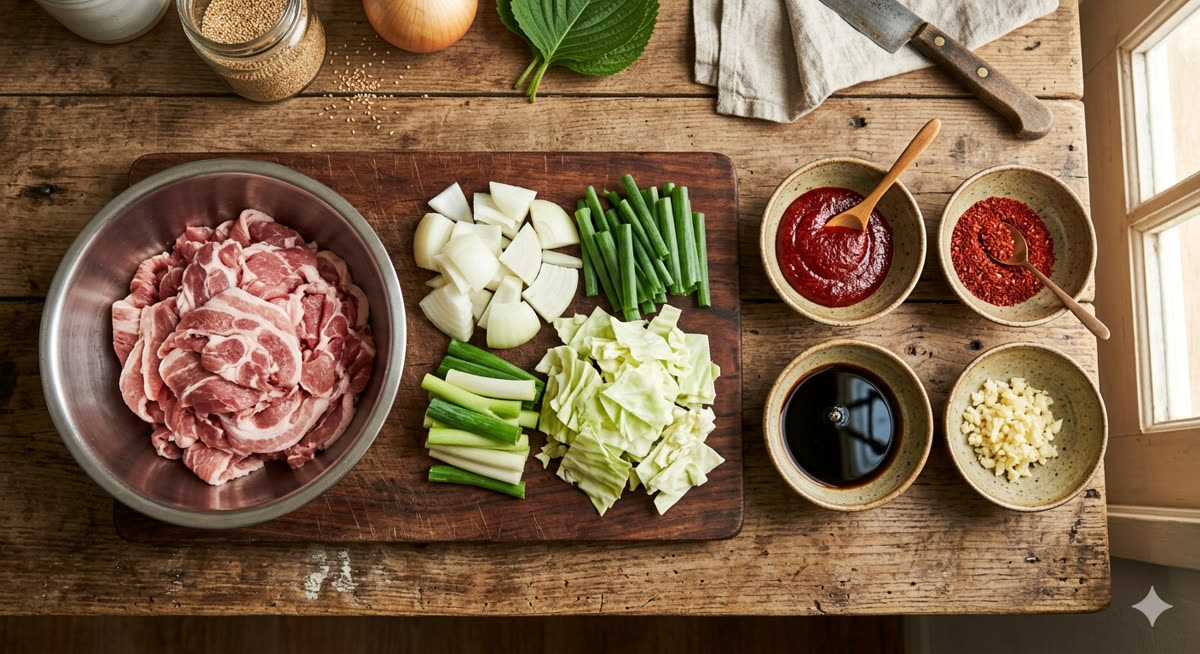
Basic information
| Dish | Jeyuk bokkeum, spicy Korean pork stir-fry |
|---|---|
| Serving size | About 3 to 4 servings |
| Main ingredient | Thinly sliced pork shoulder/front leg |
| Cooking time | About 30 to 40 minutes including prep |
| Flavor point | High heat, reduced moisture, and sauce added after searing |
To make restaurant-style jeyuk bokkeum, season sliced pork with a sauce of gochujang, Korean chili flakes, soy sauce, sugar or syrup, garlic, and cooking wine. Sear the pork first, add onion and green onion, then stir-fry with the sauce over high heat until it becomes glossy and thick.
Flavor keys
First, control moisture. Pat the pork lightly and avoid crowding the pan. Too much moisture makes the dish watery.
Second, add the sauce after the pork starts cooking. If the sauce goes in too early, it can burn before the meat is done or turn soupy.
Third, finish on strong heat. A short high-heat finish gives the sauce a concentrated, slightly smoky taste.
Ingredients
| Ingredient | Amount | Role |
|---|---|---|
| thinly sliced pork shoulder/front leg | About 600 g | Main protein |
| onion | 1/2 to 1 | Sweetness and texture |
| Green onion | 1 stalk | Aroma and finish |
| Cooking oil | 1 to 2 tablespoons | For searing |
Seasoning ratio
| gochujang | 2 tablespoons |
|---|---|
| Korean chili flakes | 2 tablespoons |
| soy sauce | 3 to 4 tablespoons |
| cooking wine | 2 tablespoons |
| Sugar | 1 tablespoon |
| corn syrup or oligosaccharide syrup | 1 to 2 tablespoons |
| Minced garlic | 1 to 2 tablespoons |
How to stir-fry jeyuk bokkeum
1. Prepare the pork. Separate the slices and remove excess surface moisture. If the pork is too thick, cut it into bite-size pieces.
2. Mix the sauce. Combine gochujang, chili flakes, soy sauce, cooking wine, garlic, sugar, syrup, and pepper in a bowl.
3. Heat the pan. Use a wok or wide frying pan and heat it well before adding the pork.
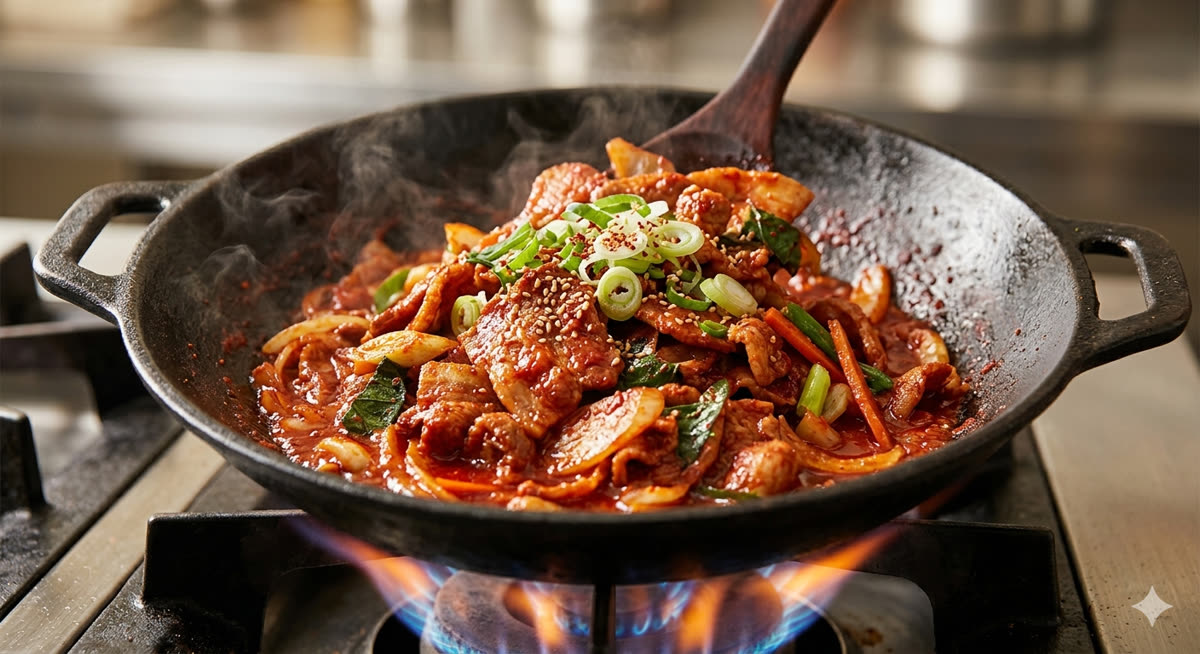
4. Sear the pork first. Stir-fry the pork over high heat until the surface changes color and some moisture evaporates.
5. Add vegetables and sauce. Add onion and green onion, then pour in the sauce. Stir quickly so the sauce coats the meat instead of pooling at the bottom.
6. Finish glossy. Keep stir-frying until the sauce thickens and clings to the pork. If it looks too wet, cook a little longer uncovered over strong heat.
Common problems and fixes
| Problem | Likely reason | Fix |
|---|---|---|
| Watery stir-fry | Too much pork in the pan or sauce added early | Cook in batches and reduce moisture before adding sauce |
| Burnt sauce | Heat too high after sauce is added | Sear first, then lower slightly while coating |
| Flat flavor | Not enough reduction | Finish over high heat until glossy |
| Tough pork | Overcooked thin slices | Use quick high-heat cooking and stop once coated |
Extra tips
A small amount of sesame oil at the end can add aroma, but too much can make the dish heavy. If you like a sweeter restaurant-style flavor, increase the syrup slightly and reduce the sauce until shiny.
FAQ
Q. Which cut is best for jeyuk bokkeum?
A. Pork shoulder or front leg works well because it has enough flavor and remains affordable for stir-frying.
Q. Can I marinate the pork first?
A. Yes, but for a more pan-fried texture, cook the pork first and add the sauce after some moisture has evaporated.
Q. What should I serve with it?
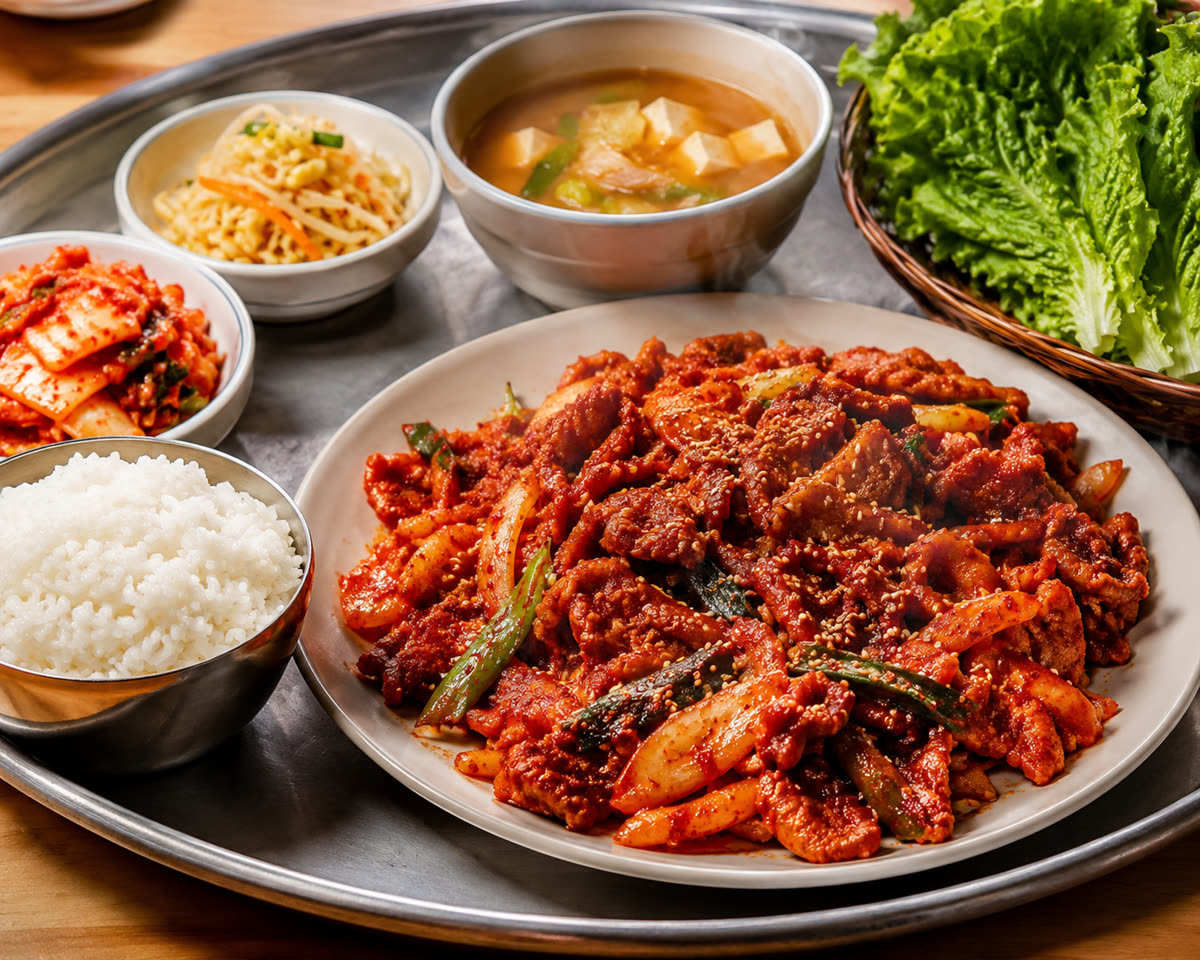
A. Steamed rice, lettuce wraps, perilla leaves, kimchi, and simple soup all pair well.
Final note
Jeyuk bokkeum is not difficult, but timing matters. Sear the pork first, keep the pan hot, add the sauce at the right moment, and reduce it until glossy. That order gives the dish the spicy, savory, slightly smoky flavor people expect from a good Korean driver-style restaurant.
More Korean home-cooking ideas
#JeyukBokkeum #KoreanPorkStirFry #KoreanRecipe #KoreanFood #SpicyPork #HomeCooking