




Budae Jjigae is the kind of hearty one-pot meal you can make with just leftover ham, sausages, kimchi, and tofu from the fridge. But when you cook it at home, it often lacks the deep, spicy kick you get at restaurants. The key is not simply adding more ingredients, but balancing the beef bone broth, kimchi, and seasoning paste, while keeping the saltiness of the ham and the tang of the kimchi in harmony.
Budae Jjigae Golden Recipe: How to Make It Rich and Spicy with Beef Bone Broth
Budae Jjigae, also known as Korean army stew, is a Korean-style fusion stew made with ham, sausages, kimchi, gochujang seasoning, and vegetables. To make it delicious at home, start with store-bought beef bone broth or an anchovy-kelp stock, then simmer it with well-fermented kimchi, gochugaru, gochujang, and soup soy sauce for a broth that tastes deep, spicy, and refreshing.
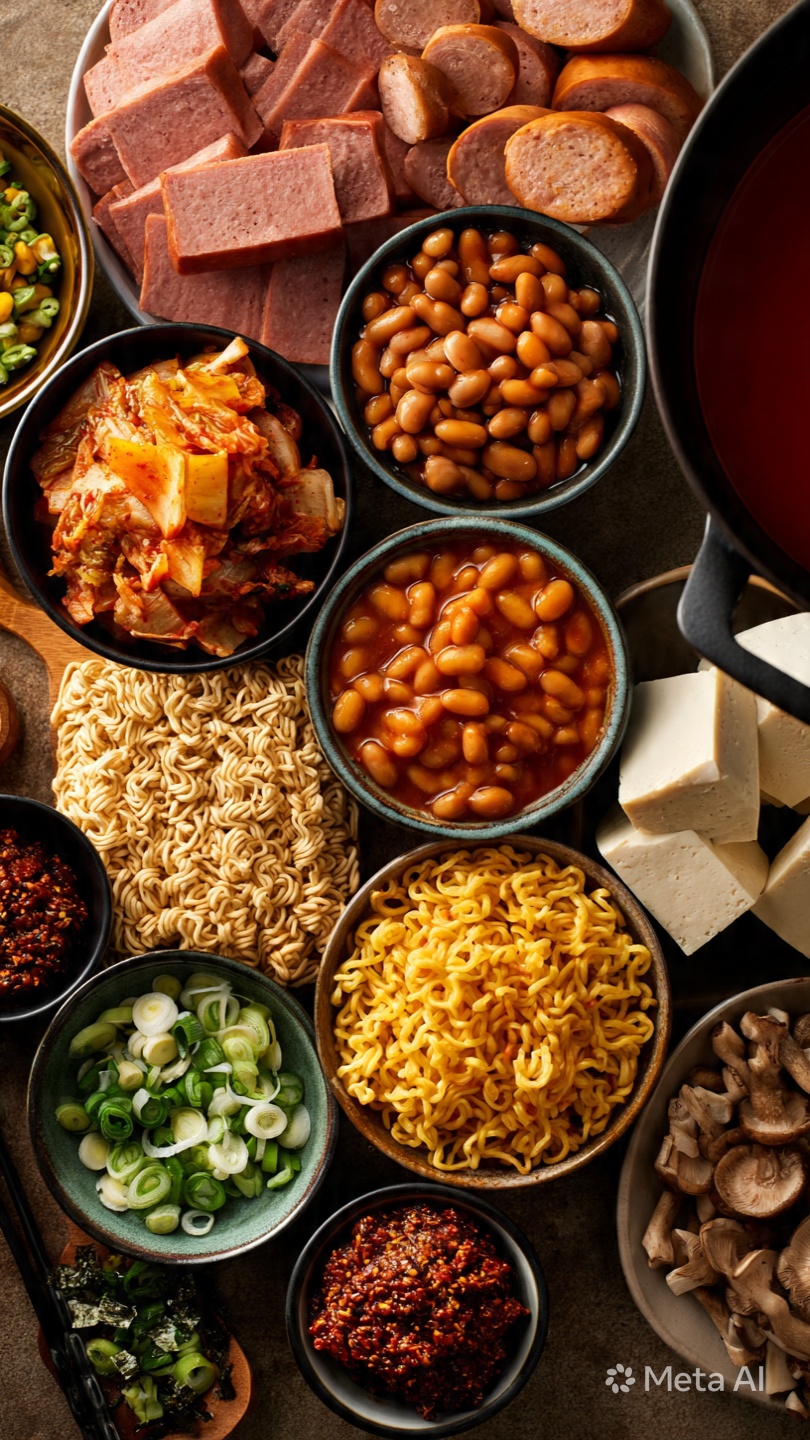
Budae Jjigae is said to have originated after the Korean War, when ham and sausages from U.S. military bases were simmered with kimchi, vegetables, and gochujang seasoning. Today, this Korean army stew is a popular restaurant dish across Korea, and Uijeongbu-style Budae Jjigae is especially famous as a regional specialty.
The best part about making Budae Jjigae at home is that you can adjust the ingredients to your taste. Add plenty of ham and sausage for a richer flavor, or add tofu and mushrooms to soften the broth. Ramen noodles and cheese should go in at the end so the noodles stay springy and the broth does not turn overly cloudy.
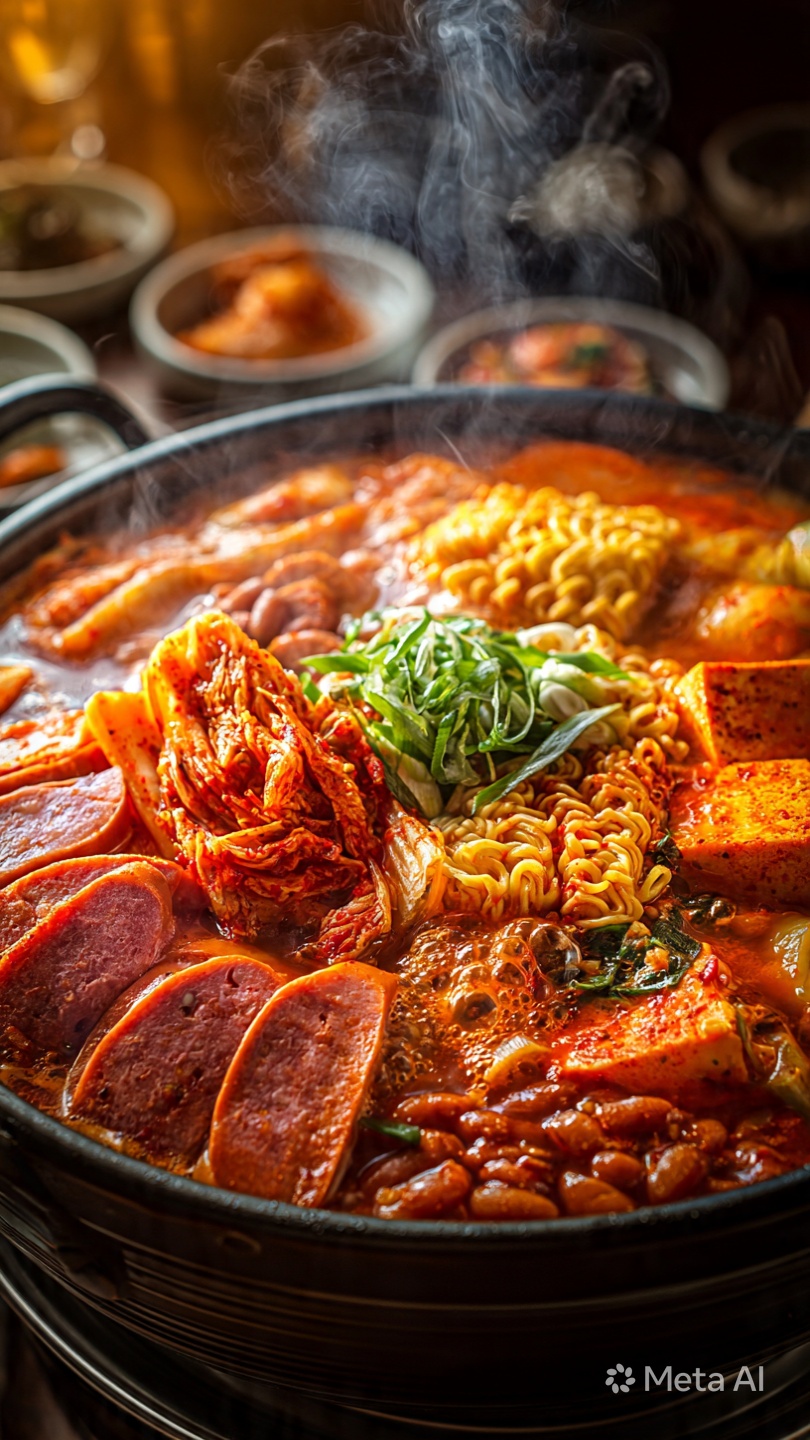
Basic Information for Budae Jjigae
Essential Ingredients for Budae Jjigae
The amounts below are for 3 to 4 servings. Using several types of ham and sausage creates a more layered flavor, but too much can make the stew salty, so adjust the broth and seasoning together.
| Ingredient Category | Recommended Amount | Role |
|---|---|---|
| Spam or canned ham | 150g | The signature salty, savory flavor of Budae Jjigae |
| Vienna sausages or frankfurters | 6 to 8 pieces | Chewy texture and meaty aroma |
| Smoked ham or bacon | 100 to 150g | Smoky aroma and deeper flavor |
| Well-fermented kimchi | 1 cup | Refreshing acidity and broth base |
| Tofu | 1/2 block to 1 block | Absorbs broth and adds a soft texture |
| Onion | 1/2 onion | Sweetness and broth balance |
| Green onion | 1 stalk | Aroma and freshness |
| Mushrooms | 1 handful enoki or king oyster mushrooms | Texture and umami |
| Baked beans | 2 to 3 tablespoons | Restaurant-style Budae Jjigae flavor |
| Cheddar cheese | 1 slice | A creamy, savory finish |
| Ramen noodles | 1 pack | Finishing noodle add-in |
| Sliced rice cakes | 1 handful | Extra heartiness and chew |
Golden Ratio for Broth and Seasoning Paste
Broth Base
Use 500ml store-bought beef bone broth + 300ml water as your starting point for a broth that is rich but not too heavy. Using only beef bone broth can taste greasy, while using only water can make the ham and kimchi flavors feel separate.
Seasoning Paste Ratio
- 2 tablespoons gochugaru
- 1/2 tablespoon gochujang
- 1 tablespoon soup soy sauce
- 1 teaspoon regular soy sauce
- 1 tablespoon minced garlic
- 1 tablespoon cooking wine
- 1 teaspoon sugar
- A little black pepper
Optional Seasoning for Deeper Flavor
Adding a very small amount, about 1/3 teaspoon, of doenjang can deepen the umami in the broth. Do not add too much, though, because it can blur the clean ham-forward taste that makes Budae Jjigae distinctive.
Ingredient Prep Tips
Do not slice the ham too thinly
If Spam or canned ham is sliced too thin, it breaks apart easily while simmering. Cut it about 0.5 to 0.7cm thick so it releases flavor into the broth while still holding its shape.
Score the sausages
Lightly scoring Vienna sausages or frankfurters helps them absorb the broth and makes them look more appetizing. Avoid cutting too deeply, or they may split open and lose their bite as they cook.
Use well-fermented kimchi
Well-fermented kimchi works better in Budae Jjigae than fresh kimchi. Kimchi with a pleasant tang makes the broth refreshing and cuts through the richness of the ham.
Rinse the ham with hot water once
Pour hot water over the ham and sausages, let them sit for about 30 seconds, then drain. This removes some surface oil and saltiness, helping the broth taste cleaner.
How to Cook Budae Jjigae
Place the kimchi and seasoning paste in the center of the pot, then arrange the ham, sausages, tofu, onion, mushrooms, and sliced rice cakes around the edges. Budae Jjigae works best when simmered like a jeongol-style hot pot rather than stir-fried first.
Add 500ml beef bone broth and 300ml water. If you add too much broth at the beginning, the flavor may become diluted, so start with enough liquid to cover about 70 to 80 percent of the ingredients and add more as it simmers if needed.
Place the seasoning paste made with gochugaru, gochujang, soup soy sauce, minced garlic, cooking wine, and sugar in the center, then bring the stew to a boil over high heat. Once it starts boiling, dissolve the paste into the broth so the ham and kimchi flavors blend evenly.
When the broth comes to a boil, lower the heat to medium and simmer for about 10 to 12 minutes. During this time, the savoriness of the ham and sausages, the acidity of the kimchi, and the nutty richness of the beef bone broth come together.
If ramen noodles go in too early, they absorb too much broth and turn soft. Add them during the final 3 to 4 minutes, after the ingredients have flavored the broth, so the noodles keep their texture.
When the ramen noodles are almost cooked, top the stew with 1 slice of cheddar cheese and green onion. Instead of fully stirring the cheese into the broth, let it melt gently on top so its creamy richness stands out.
Key Secrets for Restaurant-Style Flavor
Add 2 to 3 tablespoons of baked beans.
The slightly sweet, thick, savory taste you get at Budae Jjigae restaurants often comes from baked beans. Too much will make the stew overly sweet, so 2 to 3 tablespoons is enough.
Use only 2 to 3 tablespoons of kimchi brine.
A lot of kimchi brine can make the broth taste refreshingly sharp, but it can also become too salty and sour. Start with just 2 to 3 tablespoons, taste, and add more only if needed.
Mix the seasoning paste 10 minutes ahead for a smoother taste.
When the gochugaru absorbs moisture from the seasoning, it tastes less harsh once dissolved into the broth and gives the stew a deeper color.
Use no more than half a packet of ramen seasoning.
Because beef bone broth, ham, kimchi, and seasoning paste already add saltiness, too much ramen seasoning can make the stew salty very quickly. If you want to use it, keep it to half a packet or less.
How to Adjust the Flavor
| Problem | Cause | How to Fix It |
|---|---|---|
| Too salty | Saltiness from ham, kimchi, ramen seasoning, or beef bone broth | Add 100 to 200ml water, add tofu or onion, skip the ramen seasoning |
| Broth tastes flat | Not enough broth, kimchi is not fermented enough, or too little seasoning paste | Add beef bone broth, add 1 tablespoon kimchi brine, add a small amount of soup soy sauce |
| Too greasy | Too much beef bone broth and ham | Add kimchi and green onion, add 1 teaspoon gochugaru, add Cheongyang chili |
| Too sour | Kimchi is very fermented or too much kimchi brine was added | Add 1 teaspoon sugar, add onion, add 1 slice of cheese |
| Ramen turned mushy | Noodles were added too early | Next time, add them during the final 3 to 4 minutes |
| Broth is cloudy | Cheese and ramen noodles were cooked too long | Add cheese at the end and cook the ramen briefly |
Recommended Add-In Combinations
Ramen noodles
This is the classic add-in. Add ramen noodles only after the Budae Jjigae broth has developed enough flavor, so the noodles absorb the soup without reducing it too much.
Udon noodles
Udon noodles are chewier than ramen and do not soften as quickly. They make a rich Budae Jjigae feel even more like a hearty hot pot.
Sliced rice cakes
Rice cakes work well even when added from the beginning. They soak up the broth, become pleasantly chewy, and are great when eating with kids.
Macaroni
Macaroni is a good choice if you want to bring out an Uijeongbu-style Budae Jjigae feel. Since it absorbs broth, add only about one handful.
Dumplings
Dumplings are great when you want a more filling meal. Kimchi dumplings make the broth spicier and sharper, while meat dumplings make it heartier.
Cheese
One slice of cheddar cheese softens the broth and rounds out the saltiness of the ham. Two or more slices can make the stew too heavy, so one is usually enough.
How to Store and Reheat Leftover Budae Jjigae
- If ramen noodles are left in the stew for too long, they will absorb the broth, so add only as much as you plan to eat.
- Let leftover stew cool slightly, then transfer it to an airtight container and refrigerate.
- Refrigerated Budae Jjigae tastes best when eaten by the next day.
- When reheating, add 100 to 200ml water or broth to adjust the saltiness.
- Because this stew contains plenty of ham and sausage, reheat it until the center is fully bubbling.
- You can also reduce the leftover broth with rice for a fried rice-style finish, or add udon noodles for one last serving.
Tips for Foolproof Budae Jjigae
Using 2 to 3 types of ham works best.
Spam alone can taste too salty, while sausage alone may not give the broth enough depth. Combining canned ham, Vienna sausages, and smoked ham or bacon creates better flavor.
You do not have to stir-fry the kimchi first.
Budae Jjigae is closer to a hot pot than kimchi stew, so it works well when the ingredients are arranged neatly and simmered with broth. If you want a deeper kimchi flavor, you can lightly stir-fry just the kimchi for about 1 minute without sesame oil.
Do not make the broth salty from the start.
As the ham, sausages, ramen noodles, and cheese cook, the salt level rises. Start slightly mild, then adjust at the end with soup soy sauce or salt.
Use plenty of green onion.
Budae Jjigae is rich from ham and beef bone broth, and green onion helps cut through that heaviness. Add the white part from the beginning, then finish with the green part for a fresh aroma.
Frequently Asked Questions
Q. Do I have to use beef bone broth for Budae Jjigae?
A. It is not required, but beef bone broth is the easiest way to get that rich restaurant-style taste at home. Anchovy-kelp stock gives a cleaner, more refreshing broth.
Q. How fermented should the kimchi be?
A. Kimchi that is nicely fermented is best. Fresh kimchi can make the broth taste flat, while very sour kimchi may need sugar or onion to balance the acidity.
Q. Can I skip the baked beans?
A. Yes, you can. Baked beans help create the slightly sweet, thick taste associated with Budae Jjigae restaurants. If you do not have them, a very small amount, about 1 teaspoon, of ketchup can create a similar note.
Q. Can I add ramen seasoning?
A. You can, but half a packet or less is usually enough. Beef bone broth, ham, kimchi, and cheese all contain salt, so too much ramen seasoning can make the stew salty fast.
Q. How should I adjust it when cooking for children?
A. Leave out Cheongyang chili and reduce the gochugaru. You can also cut the gochujang in half and add extra cheese and tofu for a milder, softer stew.
Q. What is the easiest way to make it while camping?
A. Slice the ham, sausages, tofu, and vegetables at home and pack them in airtight containers. Mix the seasoning paste separately. At the campsite, arrange everything in a pot, pour in the broth, and simmer.
Final Thoughts
Budae Jjigae may look like a busy stew with lots of ingredients, but its flavor foundation is simple. When well-fermented kimchi, ham and sausages, beef bone broth, and gochugaru seasoning are balanced, you can make a rich, spicy restaurant-style Korean army stew at home. Simply mixing beef bone broth with water and adding ramen noodles and cheese at the end will greatly reduce the chance of failure.
If you have leftover ham in the fridge or a gift-set can of Spam from the holidays, Budae Jjigae is one of the best ways to use it. Add plenty of tofu and mushrooms for a satisfying meal, and finish with ramen noodles to turn it into a family-friendly hot pot. Adjust the saltiness at the end and top up the broth little by little as it simmers, and you can enjoy delicious Budae Jjigae to the last spoonful.