




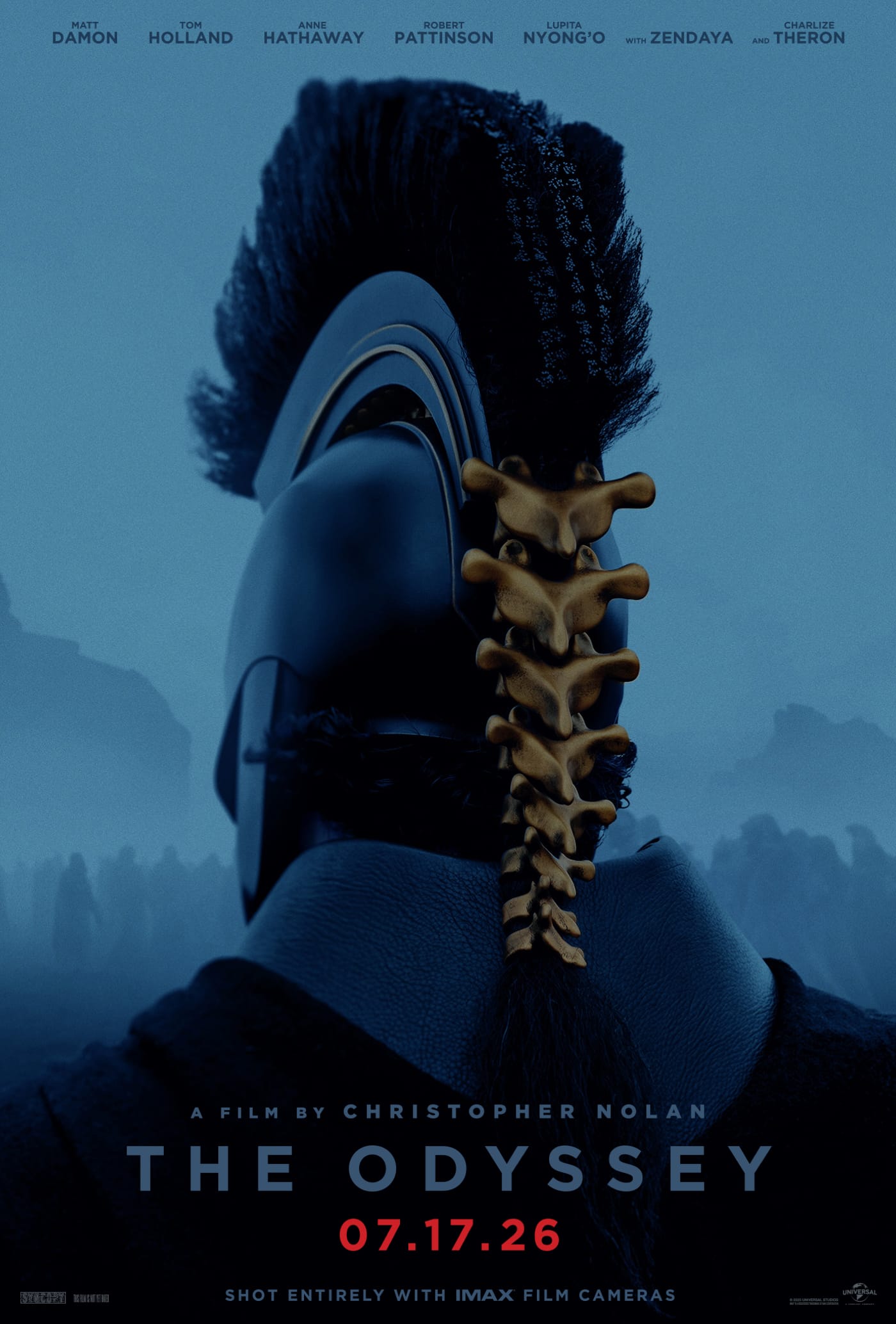
The Odyssey: Why Christopher Nolan’s Mythic Epic Is One of 2026’s Biggest Movie Events
Christopher Nolan taking on The Odyssey is the kind of pairing that instantly sounds bigger than a normal studio release. Nolan has built his modern reputation on large-scale theatrical filmmaking, time-bending structures, practical spectacle, and stories about people pushed to the edge by obsession, memory, duty, and survival. Homer’s ancient poem gives him a canvas that already contains all of those ingredients: a long journey home, dangerous seas, temptation, monsters, gods, grief, loyalty, and a hero whose cleverness can be both a gift and a curse.
Official materials have positioned The Odyssey as a theatrical release dated July 17, 2026 in the United States. Local schedules, formats, and international dates can vary by market, so anyone planning a first-week viewing should still check their local theater or distributor listing before making plans. What is already clear is that this is being treated as a major big-screen event rather than a quiet literary adaptation.
Basic information
- Director and writer: Christopher Nolan
- Source inspiration: Homer’s *The Odyssey*
- Producers: Emma Thomas and Christopher Nolan
- Distributor: Universal Pictures
- Officially promoted U.S. theatrical date: July 17, 2026
- Reported principal cast includes: Matt Damon, Tom Holland, Anne Hathaway, Robert Pattinson, Lupita Nyong’o, and others
The first hook is obvious: Nolan is stepping into myth. After films about dreams, space, war, nuclear history, superheroes, magic, and fractured identity, he is moving toward one of the oldest adventure stories in Western literature. That does not mean the film will simply retell the poem scene by scene. Nolan’s best-known work often uses familiar genre shapes as a way to explore larger questions, and The Odyssey gives him a story where action and psychology are inseparable.
Why this story fits Nolan
At its core, *The Odyssey* is not just about movement. It is about returning. Odysseus is not trying to conquer a new world; he is trying to get back to Ithaca after the Trojan War. That distinction matters. A typical adventure story asks what waits at the next destination. *The Odyssey* asks what a person becomes after years of delay, trauma, temptation, and loss, and whether home can still be home after so much time has passed.
That theme lines up naturally with Nolan’s recurring interests. Interstellar turned cosmic travel into a story about family and time. Oppenheimer turned scientific history into a portrait of ambition, guilt, and consequence. Memento, Inception, and Tenet all circle questions of memory, identity, and perception. Odysseus is a hero who survives through intelligence, disguise, storytelling, and timing. He is also a man whose name, reputation, and family are constantly at stake. In Nolan’s hands, the myth has room to become more than a parade of famous episodes. It can become a study of endurance and self-recognition.
The cast is part of the event
The reported ensemble is one of the reasons the film has stayed in the conversation. Matt Damon has already appeared in Nolan projects and brings the kind of grounded authority that can anchor a massive production. Tom Holland adds a younger, globally recognizable presence. Anne Hathaway and Robert Pattinson both have previous Nolan connections, which makes the casting feel less like a random collection of stars and more like an extension of the director’s larger screen world. Lupita Nyong’o’s involvement is also exciting because *The Odyssey* is filled with vivid figures whose emotional and symbolic weight depends heavily on performance.
Until full character details are formally locked in through official materials, it is best to avoid treating every rumored role or plot beat as confirmed. Still, the appeal is easy to understand: a mythic story with a prestige blockbuster cast gives audiences something to speculate about without needing a superhero universe or franchise homework.
What to know about the original myth before watching
You do not need to read all of Homer before seeing the movie, but a few ideas will make the experience richer.
First, the journey is a homecoming. Odysseus wants to return to his wife, his son, and his kingdom. The emotional question is not only whether he will survive, but whether he can reclaim the life he left behind.
Second, the obstacles are moral as well as physical. The sea is dangerous, but so are pride, anger, forgetfulness, desire, and the temptation to stop moving forward. The famous monsters and strange islands matter because they test different parts of the hero’s character.
Third, identity is unstable. Odysseus hides who he is, reveals who he is, and uses stories to survive. That makes the poem especially compatible with a filmmaker who often builds drama around information, perspective, and delayed revelation.
Why the theater format matters
Nolan’s films are usually discussed as theatrical experiences, and The Odyssey is likely to continue that pattern. A story built around ships, storms, islands, palaces, battles, and mythic encounters naturally benefits from scale. Premium formats such as IMAX may be especially desirable where available, but showtimes and format availability depend on each region and theater chain.
For viewers who care about seeing the film in the best possible presentation, the safest approach is simple: check official theater listings early, confirm the format, and pay attention to whether your preferred cinema is showing the film in a premium auditorium. Nolan releases can generate strong demand in their opening window, and the best seats often disappear quickly.
Expectations and cautions
The excitement around The Odyssey is justified, but expectations should stay flexible. A Nolan adaptation of Homer is unlikely to please every viewer in the same way. Some audiences may want a faithful, classical retelling. Others may expect a darker psychological epic, a puzzle-like structure, or a highly modern interpretation. The final film may lean more heavily in one direction than early marketing suggests.
That uncertainty is part of the appeal. The Odyssey is a story that has survived for centuries because it can be reinterpreted again and again. If Nolan finds a way to combine mythic spectacle with the intimate ache of wanting to return home, this could become one of the defining theatrical releases of 2026.
Bottom line
The Odyssey is not just another literary adaptation. It is a meeting point between one of cinema’s most prominent large-scale filmmakers and one of the foundational adventure stories ever written. Go in expecting a mythic journey, but pay attention to the human questions underneath: What does war do to a person? What does loyalty cost? How long can someone be away before home becomes a memory? And when the hero finally returns, is he still the same man who left?