




Semiconductor stocks have once again moved to the center of the market. This is not being read as a simple industry rebound; rather, as AI servers, high-bandwidth memory (HBM), and data-center expansion converge at the same time, the view that the memory industry has entered a structural upswing is gaining strength. Against this backdrop, Nomura Securities' aggressive target-price outlook is drawing renewed attention.
Nomura Securities' Semiconductor Supercycle Outlook
A Review of the Samsung Electronics KRW 590,000 and SK Hynix KRW 4,000,000 Scenarios
The reported Nomura Securities note interprets Samsung Electronics and SK Hynix not as companies in a conventional memory-cycle recovery, but as central players in a structural supercycle led by AI demand. In particular, the key points cited are expanding demand for HBM and server memory, a surge in data-center investment, and the possibility of valuation re-rating.
In practice, the global semiconductor market has recently been showing a different pattern from previous cycles, with memory shortages and expanding AI infrastructure investment occurring at the same time. Reuters reported that SK Hynix shares had risen by more than 200% in 2026, and that Samsung Electronics was also riding a wave of record earnings and corporate-value reappraisal thanks to AI demand and strong memory prices.
However, the figures discussed below—KRW 590,000 for Samsung Electronics and KRW 4,000,000 for SK Hynix—are not values verified directly from an original publicly available report. They are organized based on currently circulated market accounts and a user-provided draft. Accordingly, this article treats them as an “aggressive scenario attributed to Nomura Securities” and interprets them in that context.
Basic Information
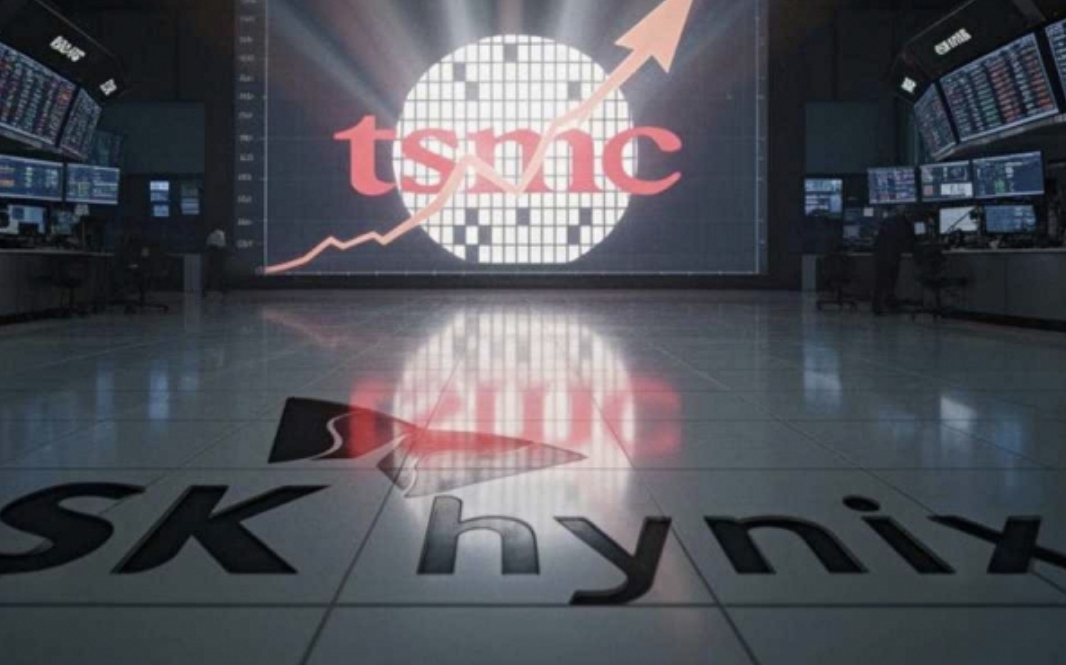
The Striking Numbers Presented by Nomura Securities
| Stock | Target Price Known in the Market | Interpretation Point | Meaning |
|---|---|---|---|
| Samsung Electronics | KRW 590,000 | A view that reflects both AI memory and foundry expectations for the established memory leader | Expectations for memory-profitability recovery and multiple re-rating |
| SK Hynix | KRW 4,000,000 | Focus on its premium as the strongest HBM player and its supply advantage in AI server memory | Reflects a view of the company as a structural growth stock rather than merely a memory-cycle stock |
Looking only at the numbers, they are very bold. But given that the market has recently begun to see SK Hynix not as a “simple memory company” but as a key company in the AI supply chain, the interpretation is not entirely out of nowhere. Reuters has also reported that SK Hynix came close to a USD 1 trillion market capitalization thanks to AI demand, explaining that demand for HBM and server memory was the direct backdrop for the share-price rise.
Why the Term “Supercycle” Is Being Used
1. Moving Beyond the PC- and Smartphone-Centered Cycle
In the past, memory semiconductors were a representative cyclical sector that rose and fell with PC and smartphone shipments. Now, however, memory demand is being supported by AI model training and inference, cloud-server expansion, and growth in enterprise data centers. In other words, the center of demand has shifted from consumer electronics to infrastructure.
2. HBM Changes the Quality of the Industry Cycle Itself
HBM does more than simply increase memory sales volume; it improves both product mix and profitability. Because high-performance memory is essential for AI-server GPUs and accelerators, companies that have secured HBM supply capacity inevitably stand at the center of the market.
3. Data-Center Investment Extends Memory Demand
As long as competition in AI infrastructure continues, global Big Tech's data-center investment is unlikely to cool easily. Recent external analyses commonly point out that memory costs are rapidly increasing as a share of hyperscaler spending.
4. The Logic of Valuation Re-rating
If the market still views the memory sector only as a “highly volatile cyclical industry,” its PER can remain low. Conversely, if the sector begins to be viewed as a core AI infrastructure asset, assessments of earnings durability and industry status may change, allowing the multiple itself to rise.
Why Samsung Electronics and SK Hynix Should Be Viewed Differently
Samsung Electronics
In addition to being a mega-scale memory company, Samsung Electronics is an integrated semiconductor company with system semiconductors, foundry, mobile, and device ecosystems. Beyond benefiting from rising memory prices, it has room to be re-evaluated across the broader AI-related component ecosystem. Reuters also reported earlier this year that Samsung Electronics was showing record earnings momentum on the back of AI demand.
SK Hynix
SK Hynix is currently most strongly recognized in the market as the leading HBM stock. Investors indeed view SK Hynix as a key beneficiary in the AI memory supply chain, and the recent sharp expansion in its market capitalization is interpreted as the result of this expectation being reflected.
Three Points to Watch Especially Closely in This Outlook
First, HBM Supply and Demand Remain Tight
As AI server demand explodes, HBM is still viewed as a product with tight supply. Because this is an area capable of generating much higher profitability than ordinary DRAM, increasing the HBM share itself becomes a factor that changes the quality of earnings.
Second, Rising Memory Prices Are Not Merely a Short-Term Event
Reuters reported that Samsung Electronics and SK Hynix are benefiting from strong memory prices thanks to AI-related demand. The interpretation gaining more persuasiveness is that supply remains under continued strain because of AI data-center expansion, rather than this being only an ordinary inventory-adjustment phase.
Third, the Key Question Is Ultimately “Sustainability”
For target prices to rise, strong earnings this year alone are not enough. The market needs confidence that demand can continue next year and the year after, and that profit capacity can be maintained. Nomura Securities' strong outlook can ultimately be seen as an analysis betting on this “sustainability.”
Variables for Investors to Check
Positive Variables
- Whether AI data-center expansion continues
- Possibility that HBM shortages are prolonged
- Rising memory ASPs and product-mix improvement
- Earnings-upgrade cycle for Samsung Electronics and SK Hynix
- Strengthening leadership of the semiconductor sector in the Korean stock market
Variables Requiring Caution
- Possibility of CAPEX adjustment after overheating in AI investment
- China- and U.S.-related semiconductor regulations and geopolitical variables
- Company-specific risks such as labor issues or production disruptions
- Greater volatility in share prices that may already reflect a substantial portion of the positives
So How Should the Share-Price Outlook Be Viewed?
The core of this Nomura Securities-attributed scenario is not the target-price numbers themselves, but the fact that the market's frame for viewing the semiconductor sector is changing. This is no longer a phase in which investors only ask, as in the past, “When will the memory cycle turn down?” It is moving into a phase in which they ask, “For how long will memory remain core infrastructure in the AI era?”
From this perspective, KRW 590,000 for Samsung Electronics and KRW 4,000,000 for SK Hynix are aggressive figures, but the direction of the logic is clear. The quality of memory demand has changed, HBM is lifting profitability, and data-center investment is supporting the long-term growth potential of the memory industry.
Interpretation at a Glance
Viewed conservatively, this outlook may be excessively optimistic. But the logic behind the bullish case is clear: AI is causing the memory industry to be reclassified from a “cyclical sector” into a “core AI infrastructure sector.” Ultimately, the factors to verify going forward are the persistence of HBM demand, the durability of memory prices, and how closely actual quarterly earnings can keep up with these expectations.
Frequently Asked Questions
Q. Are Nomura Securities' target-price figures confirmed official announcements?
A. Because an original report that can be directly verified publicly has not been secured, this article is organized based on a user-provided draft and figures circulated in the market. Therefore, it is safer to understand them as “outlook figures known in the market.”
Q. Why is SK Hynix being valued more strongly?
A. The market currently views SK Hynix as the leading HBM stock. As its status in the AI-server memory supply chain rises, a larger premium may be attached.
Q. Why is Samsung Electronics receiving renewed attention?
A. This is because several expectations are acting together: strong memory prices, expanding AI demand, scalability as an integrated semiconductor company, and the possibility of reversing the market's low valuation.
Q. Can this be viewed as an unconditional buying opportunity now?
A. That cannot be confirmed. Target prices are only forecasts, and actual share prices can vary significantly depending on earnings, industry conditions, policy, supply and demand, and global investment sentiment.
Conclusion
Nomura Securities' semiconductor supercycle outlook can be seen as a report with attention-grabbing numbers, but on closer inspection it is also an example showing why the market is trying to assign a premium to the semiconductor sector again. As the AI era enters full swing, memory and data-processing speed are becoming as important as computing power itself.
The key going forward is how much actual earnings support this bullish case. Whether HBM shortages continue, whether data-center investment is sustained, and how much Samsung Electronics and SK Hynix can prove those benefits in numbers are likely to become the next points to watch.
※ This article is for informational market-issue review only and is not investment advice. Stock investing involves risk of loss, and final decisions are the investor’s own responsibility.